Research Trends in Cognitive Sciences · 2009
Thut & Miniussi — Rhythmic Brain Activity, TMS-EEG
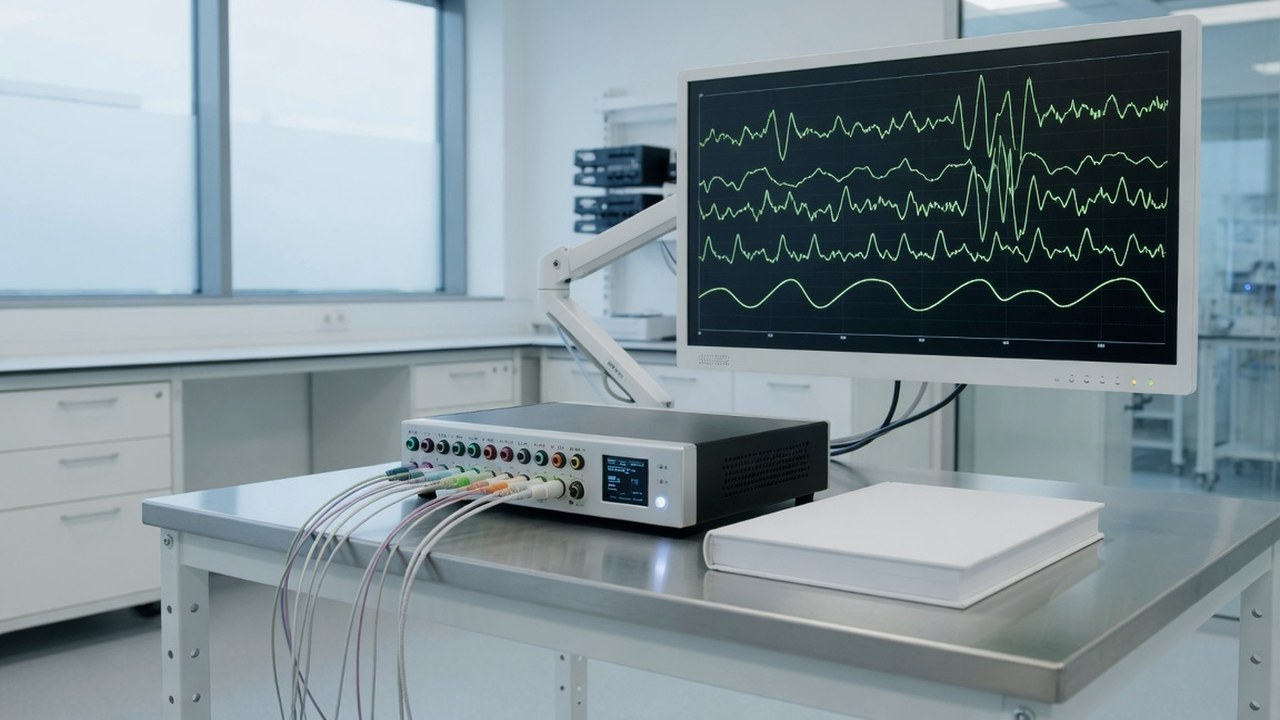
Before you say “we entrained gamma,” read how stimulation neuroscientists actually tag rhythms. TMS-EEG is a different instrument. It is the right context for the word.
Gregor Thut and Carlo Miniussi review what TMS combined with EEG taught about intrinsic brain rhythms and cognition. The paper is not about binaural beats. It is about what “rhythmic stimulation” means when the methods are heavy.
Who, where, when
Cognitive stimulation field, 2009 review. PMID 19286414.
What the work actually did
They connect oscillatory theories of attention and perception to causal perturbation with TMS, read out with EEG. Frequency is an experimental factor with timing, intensity, and site — not a playlist tag.
What it does not prove
Do not launder TMS results into headphone claims. Magnetic pulses are not dichotic tones. Shared vocabulary (alpha, gamma) is not shared mechanism.
How to use this page
Borrow the discipline: name the rhythm, name the measure, name the control. Leave the rest.
Related
Editorial reading of published research. The official paper is authoritative. Not medical advice. Not a claim that consumer audio recreates a trial protocol.