Astral Distinct phenomenon
Tibet & Himalaya — dream, clear light, bardo
Milam (dream yoga) in the Six Dharmas of Nāropa is a liberation practice inside a tantric completion-stage system. English readers get a translation, not an empowerment.
What this page establishes
- Milam is one of the Six Dharmas associated with Nāropa. Its job is recognition, awakening, and a prepared death.
- Shared practice with modern sleep-edge work, if any, is thin: attention during sleep.
- Relationship: distinct phenomenon.
- Evidence status
- Historical text via English scholarly door (Mullin / Tsongkhapa presentations).
- What is it? Dream yoga inside a completion-stage system.
- Where does it come from? Indian master Nāropa; Tibetan presentations through Marpa, Kagyu, and Tsongkhapa.
- What did practitioners use it for? Liberation; rehearsal for dying.
- What is actually documented? Named lists and translations of Tsongkhapa; variation of enumerations recorded.
- How does it relate? Distinct phenomenon. Thin shared practice (attention during sleep).
The six, named
A widely used sixfold list in Kagyu presentations associated with the Indian master Nāropa (eleventh century) and taught onward through Marpa Lotsāwa typically includes: tummo (inner heat; Skt. caṇḍālī), gyulü (illusory body; Skt. māyākāya), milam (dream; Skt. svapnadarśana), ösel (clear light; Skt. prabhāsvara), bardo (intermediate state; Skt. antarābhava), and phowa (transference; Skt. saṃkrānti / utkrānti). These are completion-stage yogas. They sit, in the lineages that carry them, on empowerment, generation-stage deity practice, and a vow structure this archive will not impersonate.
Lists vary. Tilopa’s arrangement, as later commentators report it, already differs in order and in what is bundled. Tsongkhapa, working from Pakmo Drupa’s line, prefers a listing in which inner heat, illusory body, and clear light do the soteriological work, while transference, forceful projection, and bardo are auxiliary — needed if enlightenment is not accomplished before death. Gampopa-related Kagyu enumerations are the six named above. This desk records the variation instead of pretending there is one laminated card. What does not vary is the end: awakening, not tourism.
Nāropa, Marpa, Milarepa, Gampopa — these are names in a transmission, not mascots for a sleep hack. The Six Dharmas were a Kagyu specialty; they also entered Gelug through Tsongkhapa, who received the lineage through Kagyu teachers. That historical sentence is enough. We are not a sectarian scorekeeper. Early Buddhist iddhi (flying, a mind-made body in the Pali suttas) is a different Buddhist job, not a prequel to milam. That file: Early Buddhism.
Inner heat as foundation
In the presentations this file uses, inner heat is the foundation stone. Tsongkhapa and later Gelug commentators say so in language Mullin translates without embarrassment: the inner heat is the foundation of all the yogas; without the capacity to gather vital energies into the central channel, to make them abide and dissolve, the later yogas are not a kit you open on a Saturday. Dream yoga “by resolution” — intending to recognize the dream — is acknowledged as a beginner’s method. It is not the primary method of the Six Yogas. The primary method is energy control already achieved in waking practice, then applied at the moment of sleep.
That architecture is the first reason this is a distinct phenomenon. A modern AP manual can be read in an evening. Tummo is not that. This desk will not extract a “heatless milam” and call it the tradition. We will also not ship breathing diagrams, channel maps, or sexual-yogic fragments as if a browser were a lama.
Dream yoga’s job
Dream yoga, in that architecture, trains recognition of the dream as dream so that waking appearance can be known as illusion and so that the death process is not a surprise. Mullin’s translations of Tsongkhapa are explicit on the sequence: retain the clear light of sleep; when dreams occur, recognize them as such; train in the illusory nature of dream content, including fear; meditate on suchness in the dream. The point of recognizing dream-fire and dream-water as unable to burn or drown you is not a stunt. It is preparation for taking the bardo as the same class of appearance, and for not being taken in by it.
Later, the same presentations say: if you can recognize the clear light of sleep in life, you will be in a position to recognize the clear light of death; if you can work the subtle energies in dream, you will be in a position to work them in the bardo. Dream is a rehearsal for dying, and dying is not a metaphor. That is the purpose. It is not “leave the body and look at the bedroom.” It is not a target-person exercise. It is not a three-day seminar claim.
A thin resemblance remains, and we will name it rather than deny it: both milam and some modern sleep-edge methods ask a person not to sleep as an accident. Attention is brought into the night. That is shared practice at the level of a sentence, not a lineage. Shared practice is not shared ends. See Semantics.
Clear light of sleep
“Clear light of sleep” is a technical term inside this system. It names the luminosity that presentations describe as arising in the process of falling asleep — the fourth emptiness in a dissolution sequence that the yogi has already learned to induce in waking inner-heat practice. Retaining it is, in Tsongkhapa’s account as Mullin gives it, the supreme method for working in the dream state. If you treat the phrase as a hypnagogic aesthetic, a YouTube theta track, or a synonym for “nice sleep imagery,” you have already left the text.
This matters for the sleep chapter of this archive. Hypnagogia is a well-described sleep-onset process. Clear light of sleep is a soteriological object in a tantric completion stage. They can be forced onto one line only by theft. Label: distinct phenomenon. The sleep essay will say the same and point here. Sleep, lucidity, paralysis.
Mullin / Tsongkhapa as English door
Glenn H. Mullin’s translations and editions of Tsongkhapa’s presentations — Tsongkhapa’s Six Yogas of Naropa and the related Snow Lion / Shambhala collections, including Readings on the Six Yogas of Naropa — are a responsible English door for readers who will not receive Tibetan instruction from this site. Tsongkhapa is already a commentator, not Nāropa speaking. Mullin is already a translator. Two frames. We use them because they are named, in print, and because they refuse the weekend-kit fantasy: inner heat first; dream yoga as part of dying well; no claim that reading English is practice.
What the door is not: an empowerment, a sādhana, a substitute for a living teacher in a living lineage, or a BBM protocol. Operators who want this tradition should find those teachers in that tradition. This floor’s quality-control rule applies with extra force. If we cannot say what the source meant, what the document is, whether the AP comparison is original or imposed, what the kinship is, and what the purpose was — we do not invent. Here the answers are available. They do not run in our favor as a projection school.
Kinship, named
- Distinct phenomenon — the primary label. A completion-stage yoga in a tantric liberation system is not the English popular practice called astral projection, and it is not a laboratory OBE. Collapsing them is the error this atlas exists to block.
- Shared practice — only at the thin level of “attention during sleep” / “do not sleep as an accident.” Recognition of the dream as dream can look, from a distance, like lucidity training. Distance is the point. Lucidity research (LaBerge, Voss, Stumbrys) is a different desk with different ends. See Research.
- Not a direct predecessor of English AP vocabulary. That job belongs to Theosophy. Europe & the English “astral”.
- Not a modern reinterpretation we will perform. Other writers may reread milam as AP. This archive will not.
The AP comparison is imposed, not original. Eleventh-century Nāropa and fifteenth-century Tsongkhapa were not drafting Monroe. Purpose, again: liberation in one lifetime if the foundation is laid; failing that, a trained death; not a tour of planes.
What this desk will not do
- Will not ship a tantra, a channel diagram, a heat-yoga, or a “BBM milam.”
- Will not treat the Bardo Thödol as a user manual for AP-02, or confuse the Six Dharmas with a single popular English “Tibetan Book of the Dead.”
- Will not pretend that consumer audio recreates the clear light of sleep.
- Will not flatten Kagyu and Gelug presentations into one laminated list and call it ethnography.
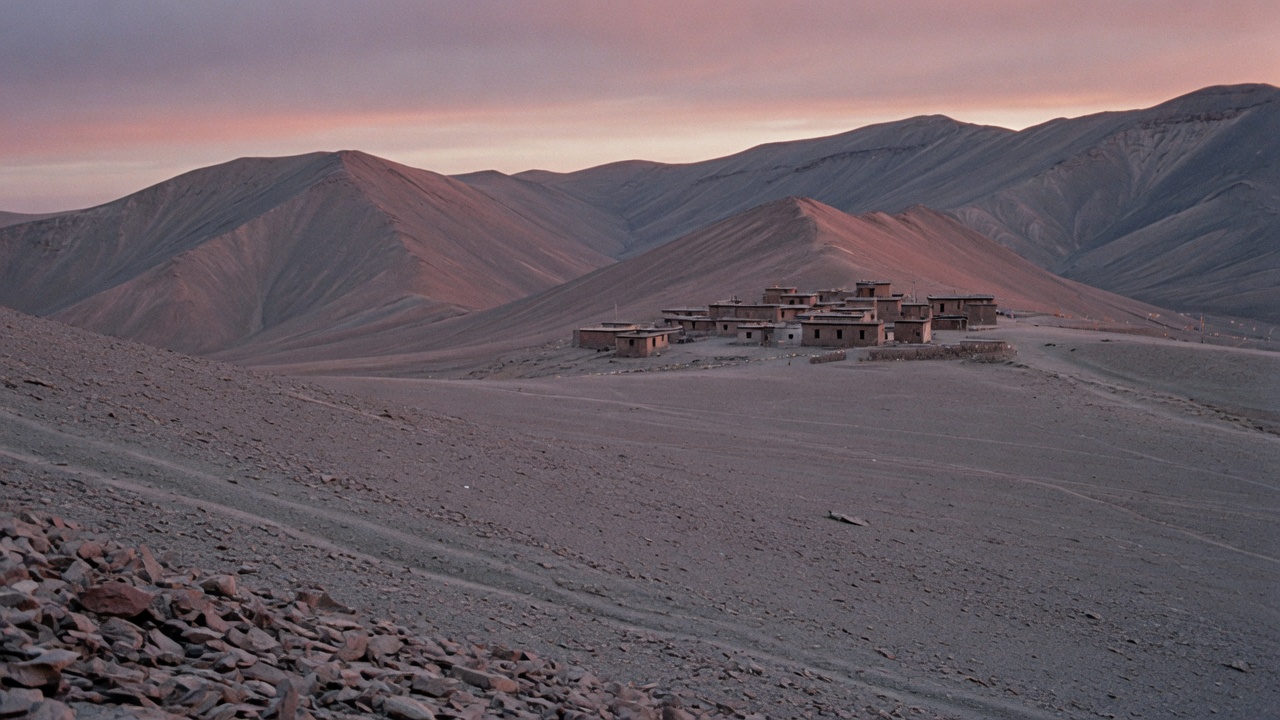
- Will not use Himalayan sacred art as if we had photographed a ritual. The figure on this page is a desk.
Dream-awareness as a method family on the methods encyclopedia is labeled there as shared practice without claiming the Tibetan end. Distinct remains distinct. Methods.
Bibliography
- Mullin, G. H. (trans./ed.). Tsongkhapa’s Six Yogas of Naropa. Snow Lion / Shambhala. — English door to Tsongkhapa’s presentations; inner heat as foundation; clear light of sleep; dream yoga in a death-and-liberation architecture.
- Mullin, G. H. (trans./ed.). Readings on the Six Yogas of Naropa. Snow Lion. — Tilopa, Nāropa, Tsongkhapa, and later Gelug commentators; useful for seeing that “the six” is a family of lists, not a sticker.
- Standard sixfold Kagyu enumerations (Gampopa-related): tummo, gyulü, milam, ösel, bardo, phowa. Recorded here as a presentation, not as the only one.
Educational only. Not medical advice. Headphones required for a true binaural beat. Not affiliated with the Monroe Institute. Experience is not interpretation is not a scientific claim.