Astral Flagship history
From binaural beats to altered-state audio
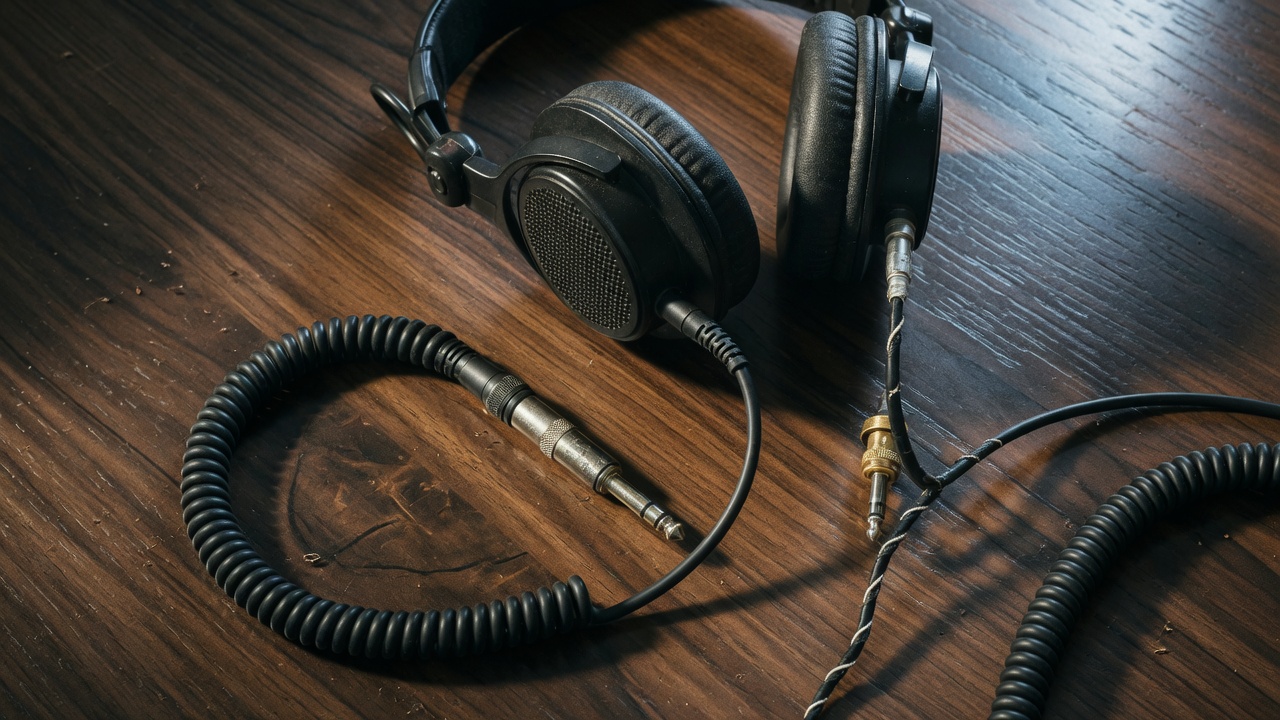
A binaural beat is an auditory effect: two close tones, one to each ear, and many listeners hear a pulse at the difference. The pulse is built by the auditory system, not in the room. Headphones are required.
What this page establishes
- The binaural percept is older than consumer “theta” tracks. Dove described it in 1839; Oster explained it in 1973.
- Headphones are required for the dichotic setup. Speakers mix the tones in the air.
- Stereo audio later entered English out-of-body culture as a training tool. That is influence, not invention of the percept.
- Beat-outcome literature is mixed and is not a projection literature.
- Evidence status
- Historical for the percept; experimental and meta-analytic for some behavioral and EEG claims; unresolved as a cause of out-of-body experience.
1839 — a percept with two ears
Heinrich Wilhelm Dove described binaural beats in 1839: present two close frequencies, one to each ear, and a listener may hear a pulse at the difference. For more than a century the effect sat in acoustics as a curiosity about binaural hearing — how the nervous system uses tiny timing and frequency differences to locate sound. It was not a wellness protocol. It was not a metaphysics. It was a fact about two ears.
That matters because later marketing often talks as if “binaural beats” were invented in the 1970s. They were not. What changed in the late twentieth century was use: a psychoacoustic probe was recruited into meditation tracks, sleep playlists, and altered-state training culture.
1973 — Oster explains the effect
Gerald Oster’s October 1973 Scientific American article, “Auditory Beats in the Brain,” is the modern scientific explanation most later writers still cite. Oster contrasted binaural beats (one frequency per ear; the difference built in the brain) with monaural beats (the mix already in the air). That distinction is why headphones are required. Oster, 1973
In plain terms: the beat is a way to study how the brain uses tiny timing differences between the ears to locate low-frequency sound. Oster did not offer a consumer protocol, a guaranteed EEG lock, or a medical claim. This site’s research shelf keeps a full reading: Oster — Auditory Beats in the Brain.
What changed: use, not invention
After Oster, a consumer literature grew. Sleep tracks. “Theta” playlists. YouTube hours labeled as if a number were a drug. Parallel to that, experimental papers tried to measure cognition, anxiety, pain, and EEG. None of that literature is a single school’s biography. Most people who put on binaural-beat headphones today are not running anyone’s course. They are running a file.
A live drum and a binaural beat can share a tempo without sharing a mechanism. Full comparison: Breakdown. Journeying literature: Journeying.
One school that used stereo
Robert Monroe’s Journeys Out of the Body (1971) is a first-person narrative of out-of-body reports. He later built audio methods and a civilian school — the Monroe Institute — around Hemi-Sync and numbered Focus states. Gateway is a course inside that school. That is a real historical fact about how stereo headphones entered English out-of-body culture. It is not the origin of the binaural percept, and it is not this console.
We do not host pirated Gateway or Hemi-Sync material. We do not impersonate that school. If that is the work you want, go to them. The public FOIA trail — McDonnell’s 1983 INSCOM assessment, Institute papers in the RDP96 series, and the separate Star Gate remote-viewing collection — is part of this study: Files. Declassified desk: Gateway Process, Monroe Institute in the FOIA record, Hemi-Sync in FOIA.
A recurring claim: “The Gateway document proves astral projection.” Status: incorrect interpretation of a government assessment. The paper discusses hemispheric audio, Focus language, and trainee reports inside a course.
What the beat-literature actually pooled
Garcia-Argibay, Santed and Reales (2019) meta-analyzed binaural-beat studies and reported small-to-moderate average effects on some measures, with the usual meta-analytic cautions — heterogeneity, small samples, publication bias. Innamorati and colleagues’ 2023 EEG systematic review is the right next door when someone says “it entrains the brain” as if that sentence were finished. Readings: Garcia-Argibay meta-analysis, Innamorati EEG review.
The editorial rule on this page:
- Do not say “4 Hz causes astral projection.” Unsupported causal claim.
- Do not say “binaural beats are useless.” The percept is real; some outcome literatures are mixed, not empty.
- Do say: audio on this console is an experimental aid designed around relaxation, sustained attention, and sleep-transition conditions commonly used in out-of-body practice. A particular beat frequency is not established as a reliable switch that causes projection.
What this console is doing
This console generates true stereo: left and right ears get different tones; the beat is the difference. That is Oster’s setup, not a speaker trick. The sits expose the program you are running — name, duration, a written prompt, a diary box. They are designs you can disagree with, modify, and journal. They are not metaphysical constants, and they are not anyone else’s product.
The historical question then opens outward: where else have humans described a self that did not stay put? That is the Global Atlas — comparison with labels, not a single origin myth.
Sources
- Dove, H. W. (1839). On binaural beats in the context of binaural hearing (historical description; see Oster’s review for the modern framing).
- Oster, G. (1973). Auditory beats in the brain. Scientific American, 229(4), 94–102. PMID 4727697
- Monroe, R. A. (1971). Journeys Out of the Body. Doubleday.
- Harner, M. (1980). The Way of the Shaman — drum in the room, not Oster’s setup.
- U.S. Army INSCOM. (1983). Analysis and Assessment of the Gateway Process. FOIA. BBM essay
- Garcia-Argibay, M., Santed, M. A., & Reales, J. M. (2019). Psychological Research, 83, 357–372.
Educational only. Not medical advice. Headphones required for a true binaural beat. Not affiliated with the Monroe Institute. Experience is not interpretation is not a scientific claim.