Astral Doctrine
Start here
We don’t promise that you will leave your body. We don’t claim we can prove that anyone does. We also don’t pretend that millions of first-person reports can be dismissed because their interpretation is disputed. Your experience is yours. Our job is the best map we can draw.
Experience — “I experienced myself outside my body.” A first-person report. It can be careful or careless, repeated or once-only, invited or inflicted. It is data of a kind. It is not yet a theory.
Interpretation — “My consciousness left the physical body.” A story about what the report means. Traditions disagree. Laboratories disagree. Operators disagree with themselves a year later.
Scientific claim — “Consciousness can independently perceive physical reality outside the body.” A testable proposition. It requires method, controls, and a willingness to be wrong. It is not settled by intensity of feeling, antiquity of a tradition, or a government PDF.
Those three lines are the whole method of this archive. Collapse them and the pages become either a shrine or a sneer. Keep them apart and you can read a first-person book without swallowing a product line, and a stimulation paper without erasing a century of reports.
Why this sits on a binaural console
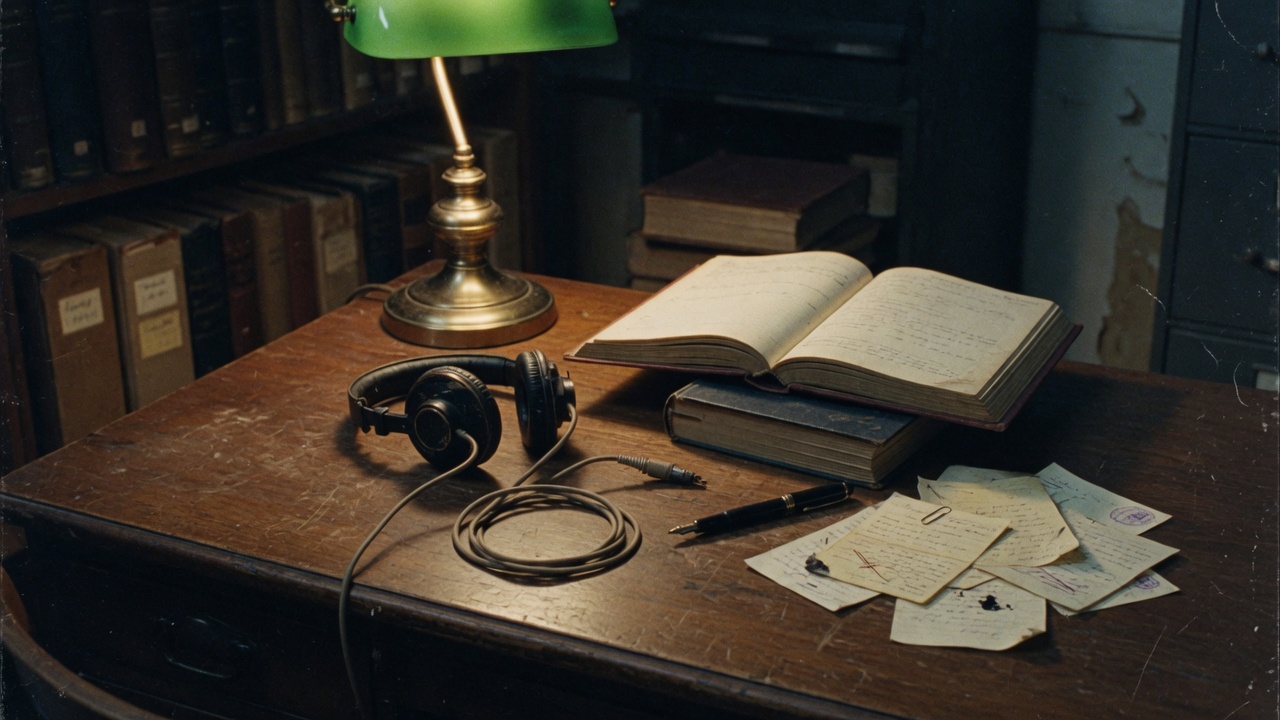
Astral projection is not a paranormal sticker bolted onto Binaural Beat Machine for traffic. A lot of modern English practice happens lying down, with attention held, often with sound in the ears. This instrument already generates true stereo: two tones, one to each ear, a pulse at the difference. Headphones required. Speakers mix the two ears in the air and you are no longer running that setup.
The percept itself is old. Heinrich Wilhelm Dove described it in 1839. Gerald Oster’s 1973 Scientific American article put it back on a scientific desk. In the late twentieth century it was recruited into meditation tracks, sleep playlists, and — in one well-known American school — out-of-body training. That school is documented on the Audio page. It is not this console. We do not host anyone’s course tapes. We do not impersonate anyone’s session names.
Garcia-Argibay and colleagues (2019) pooled effects that are, on average, small-to-moderate on some measures and sensitive to design. That is a ledger, not a hymn. If you want a private institute’s coursework, go to them. Here you get two carriers, one difference, a timed program, a prompt, and a diary box.
How to use the archive
- Read Words so “astral,” “OBE,” “lucid,” and “sleep paralysis” do not steal each other’s clothes.
- Read Research for what has been demonstrated, proposed, and left open — including Blanke’s stimulation work and the 2025 scoping review of 87 OBE publications.
- Read the Global Atlas as comparison, not as proof that every culture “did astral projection.”
- Read Methods for the recipes, then, if you still want to work, open a sit on Astral Practices. Journal what happened. Do not retrofit a YouTube caption onto the hour.
What this is not
- Not a frequency-myth page, and not a debunking page.
- Not anyone’s private institute, trademarked audio, or numbered Focus states.
- Not medical treatment, and not a claim that consumer audio recreates a neurosurgical protocol.
- Not a license to treat other people’s traditions as unfinished drafts of a late-century American book.
The eight sits on the Experience tab are timed stereo programs plus a written prompt and a diary. They are a modern sitting method. They may rhyme with a drum journey, with a sleep-edge night, with a dream-yoga session’s attention. Rhyme is not identity. Write what happened. Leave the label for morning.
Bibliography
- Oster, G. (1973). Auditory beats in the brain. Scientific American, 229(4), 94–102.
- Monroe, R. A. (1971). Journeys Out of the Body. Doubleday — one first-person book in a larger English chapter.
- Garcia-Argibay, M., Santed, M. A., & Reales, J. M. (2019). Binaural-beat meta-analysis. Psychological Research, 83, 357–372.
- Moix, J., Baldaccini, S., & Isern, M. (2025). Out of body experiences: scoping review. EXPLORE, 21(4), 103196.
- Blanke, O., Ortigue, S., Landis, T., & Seeck, M. (2002). Stimulating illusory own-body perceptions. Nature, 419, 269–270.
Educational only. Not medical advice. Headphones required for a true binaural beat. Not affiliated with the Monroe Institute. Experience is not interpretation is not a scientific claim.