Astral Fear
The lock, the stories, the lamp
Sleep paralysis is a motor fact: in dream-sleep the large muscles lock so you do not act out the dream. Awareness can return before that lock lifts. You know the room. You cannot move. Folklore grows around that lock. This page names the fact, the stories, and what to do with the lights on.
What this page establishes
- Sleep paralysis is REM muscle lock plus waking awareness. It is usually brief.
- Pressure, buzzing, a sensed presence, or a figure are common reports around that lock. They are not a required “exit.”
- Do not coach terror as a technique. Sit up. Lights on. Name the room.
- Evidence status
- Clinical description of REM atonia; first-person reports of the overlap; folklore as culture, not as mechanism.
- Why it matters
- Fear is the conversion gap. If you cannot name this state in advance, you will misname the night and you may treat panic as progress.
The motor fact
In REM sleep the large skeletal muscles are normally inhibited — atonia — so the dream is not acted out. Sometimes awareness returns before the lock lifts. You are in the room. You cannot move or speak. There may be pressure on the chest, buzzing, a sense of someone there. It can last seconds to a few minutes. Then the lock lifts.
That sequence is a sleep fact, not a verdict on souls and not a diploma. How-to culture often meets it at the same hours it uses for projection: late night, on the back, after an interruption. Neighbor, not identity. Lucid dreaming is knowing you are dreaming. An out-of-body report is the impression of being located outside the ordinary body. Sleep paralysis is awareness plus the lock. You can have one, two, or a night that will not sit still in any box. Sleep, lucidity, and the edge
If this happens often and wrecks the next day — especially with heavy daytime sleepiness — that belongs with a clinician. This page does not diagnose narcolepsy or anything else.
The folklore
Cultures have named the lock: a hag, a weight on the chest, an old woman, an incubus, a visitor at the bed. Modern English how-to often names a shadow, a watcher, or “an entity in the room.” The report is often the same shape: I could not move, and something was there.
“I could not move and there was a figure” is a report. “An entity was in the room” is an interpretation. “I was stuck halfway out” is another interpretation. Intensity does not pick the winner. Do not complete a night through terror for a screenshot. Do not tell someone in panic to finish a separation.
What to do with the lights on
- While the lock is on. Remember you named it. Breathe. Wait. You do not have to fight a figure or negotiate with it.
- When you can move. Sit up. Lights on. Say the room out loud — bed, lamp, date if you can. Feet on the floor if that helps.
- Do not lie down immediately to “finish.” The night can wait. Write a few lines while recall is warm: lock, duration if you can guess, what you saw or felt, then, in a separate sentence, what you think it meant.
- If you are still convinced you are “out.” Stay up. Lamp. Do not drive. The session is over.
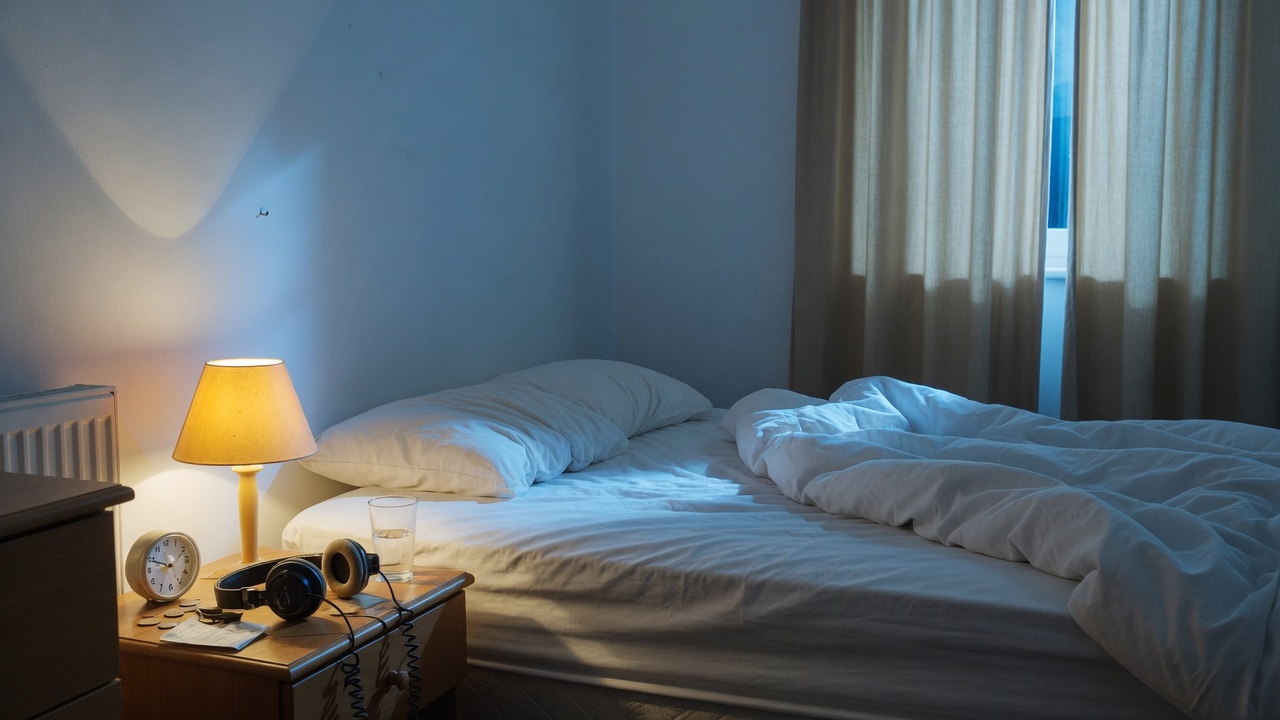
A lamp within reach is part of the method. So is a bed you can leave. If you would not rest in that chair, you do not run a sit in that chair.
The sit on this console
Lights On is a twelve-minute quiet stereo field. It is not an exit technique. Guests can run it. The job is to hear the four steps with a lamp in reach, or to use the same steps after a lock in the night. Headphones optional if sitting up is the point; required if you want a true binaural beat.
Sleep-edge practice — waking after a few hours, going back to bed — is a different sit: Second Sleep. Do not stack that sit on a morning you owe other people. First familiarization, when you are not afraid: The Window.
Sources
- Moix, J., Baldaccini, S., & Isern, M. (2025). Out of body experiences: scoping review. EXPLORE, 21(4), 103196. Notes that sleep paralysis and lucid dreaming can facilitate OBE reports for some people.
- LaBerge, S. P., Nagel, L. E., Dement, W. C., & Zarcone, V. (1981). Lucid dreaming verified by volitional communication during REM sleep. Perceptual and Motor Skills, 52(3), 727–732.
- American Academy of Sleep Medicine. Sleep paralysis as a parasomnia associated with REM atonia. Clinical description, not a projection manual.
Educational only. Not medical advice. Headphones required for a true binaural beat. Not affiliated with the Monroe Institute. Experience is not interpretation is not a scientific claim.