Astral Motifs
A catalog of reported motifs
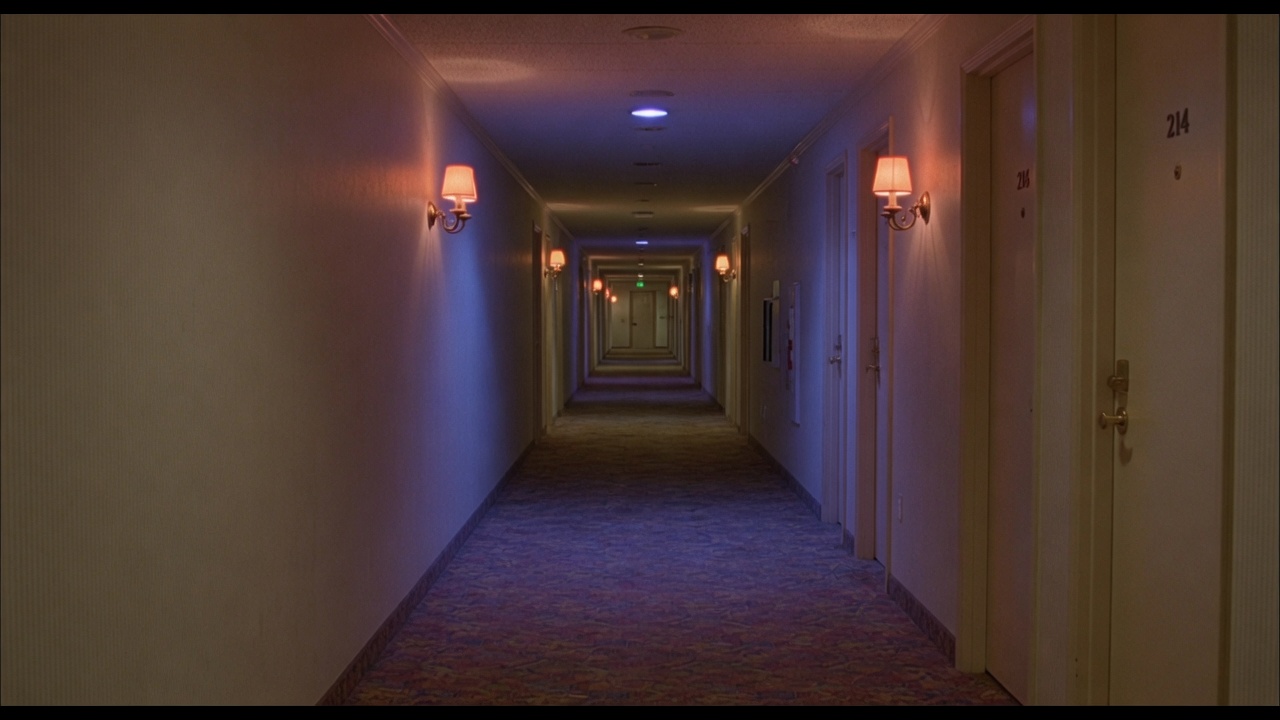
People who try this work, and people who never meant to, keep reporting similar sensations: buzzing, heaviness, a hallway, looking down at a body, a snap back into bed. This page explains those reports in ordinary language. Recurring descriptions are common. Recurrence is not a map of another world, and it is not proof that “it was just a dream.”
What this page establishes
- Recurring sensations (buzzing, paralysis, a hallway, looking down at a body) are documented in practitioner and laboratory reports.
- Recurrence is shared phenomenology. It is not, by itself, a map of another world or a verdict that “it was just a dream.”
- Write the 3 a.m. description first. Put interpretation in a separate sentence.
- Evidence status
- Catalog of reported motifs. Candidate mechanisms are labeled as such.
How to read this page
In 2025, Jenny Moix, Samantha Baldaccini, and Marta Isern reviewed 87 published papers on out-of-body experiences (1987–2024). What they found is a good starting point. The reports are very different from person to person. They often feel more real than a normal dream. They can happen on their own, or after a method someone practiced. Sleep paralysis and lucid dreaming can make them more likely for some people. Researchers still argue about causes: the brain and the body, psychology and expectation, or a mind that is not confined to the skull. The review does not pick a winner. It says the question is still open.
This page is not that paper. It is a plain-language list of what people actually say they felt. For each sensation, three things matter, and they are not the same:
- What you felt — the report. “I heard a buzz. I could not move. I seemed to look down from the ceiling.”
- What you think it means — the story. “My energy body left.” “I was dreaming.” “I was dying.” Those are interpretations. They can change in the morning.
- What has been shown — usually unfinished. A hospital probe can move the felt location of the self. That does not prove every 3 a.m. report is the same thing. Intensity of feeling is not a trial.
Write the first column while it is still warm. Leave the second for later. Do not let a book fill in blanks you did not live.
Falling asleep — images, voices, a drop
As you drift toward sleep, the mind often throws up pictures and sounds that are not in the room: colored geometry, a voice saying your name, a face too close, the sense of falling through the mattress. Sleep researchers call this hypnagogia (at falling asleep) and hypnopompia (at waking). It is a normal edge process. Almost every culture that talks about the border of sleep has some version of it.
How-to books often call this “the gate,” as if the pictures were a doorway you should push through. The pictures are real as pictures. They are not automatically a place. You do not have to follow them. You also do not have to fight them. Notice, and stay with the body. More on the sleep cluster: Sleep.
Buzzing, heaviness, vibration, ringing
Many modern manuals treat a strong buzz, roar, ring, or whole-body vibration as the main event — “the vibrational state,” energy rising, the start of leaving. The sensation is extremely common in that literature. It is not required. Plenty of careful reports never mention it.
Nobody has shown a single cause. Candidates include the inner ear, the normal muscle-lock of REM sleep leaking into awareness, ordinary hypnagogic sound, the heartbeat you suddenly notice in a quiet room, and expectation: you read that vibration means you are close, so you wait for it. Why some people get it every time and others never do is still open.
If it spikes into panic, sit up. Turn on a light. Say the name of the room out loud. Intensity is not a diploma. You are not failing the sit by stopping.
When you cannot move
In REM sleep the body is normally paralyzed so you do not act out the dream. Sometimes awareness comes back before the muscles do. You are awake enough to know the room, and you cannot move or speak. There may be pressure on the chest, a sensed presence, buzzing, fear. That is sleep paralysis. It is defined by the motor fact — you cannot move — not by a story about almost leaving the body.
How-to culture sometimes rebrands this as “almost there.” If the person is terrified, that rebrand is a doctrine talking, not a body. Name it in advance so it has a handle. First-class page: Paralysis. Sit: Lights On. Breathe. Wait. It usually passes in seconds to a couple of minutes. Sit up when you can. Do not immediately lie down again to “finish.” Recurrent, impairing paralysis — especially with daytime sleepiness — belongs with a clinician, not with headphones.
When nothing happens
Many nights contain neither vibration nor a movie. You listened. You stayed with the body. You got heavy, or you slept, or you thought about tomorrow. “Nothing cinematic happened” is a real report. It is not a failure of the instrument. It is not proof that binaural beats “do nothing.” It is a night. Write your experience and keep a data log.
The feeling of leaving — roll, float, climb, snap
Once someone is relaxed, often at the edge of sleep, some how-to books suggest a movement you imagine: rolling out of the body, floating up, sitting up, or climbing something you can feel but not see. Those are techniques, not a required sequence. They are listed as recipes on Methods. How-to books often call the moment “the exit.”
Laboratories have cousins of this feeling that do not require a bedtime. In 2002, Olaf Blanke and colleagues stimulated a region of the right parietal lobe in a 43-year-old woman being evaluated for epilepsy. She reported sinking, falling, distorted limbs, and seeing herself from above. In 2007, H. Henrik Ehrsson used cameras and touch on healthy volunteers and shifted where they felt themselves to be, a few feet behind the body. Those experiments show that the feeling “I am here” can, at least sometimes, be moved by the brain and the senses. They do not show that every long, high-reality night at 3 a.m. is the same as a hospital probe. In your notes, write what you meant to try, then write what actually happened. Those two lines are often not the same, and both are useful.
Looking at your body
A classic report: you seem to be at the ceiling, or in the doorway, looking at a body in the bed. How-to books treat this as proof you left. Other readings exist and are not insults: a constructed picture of the room from memory; a dream of the bedroom; a split in the body-map of the kind Ehrsson pulled with cameras. The 2025 review notes that a strong sense of reality is typical. Typical is not a trial. The feeling that it was real is part of the report. It does not settle the mechanism.
Some people report a partial version: one arm “out,” stuck at the hips, a copy that will not finish. Tactile how-to books call this incomplete separation. Mixed imagery and expectation of a “complete” box are enough to produce the same story. Do not strain. Coming back is always allowed.
The room, flight, other people
Seeing the bedroom from above is the most common exploration report. It is also the easiest to explain as a picture the brain can build from memory — and the hardest for the person to accept as “just” that, because of how real it felt. Both facts can sit on one line. A stronger claim is different: “I saw the book on the dresser, and I could not have known it was there.” That is a testable sentence. It needs a protocol set up in advance. This archive does not pretend that protocol is finished.
Flight, other landscapes, a black space people call “the void,” time that feels stretched or gone: here culture rushes in. Nineteenth-century occult books supply planes. Internet forums supply a named black space. Religions supply souls. Write what you saw. Keep the label for morning. A named plane is not a GPS coordinate.
Encounters — a deceased person, a presence, a figure in the corner — belong in the notes as what they were like, not as a harvest of other people’s dead. A presence during sleep paralysis has a clinical neighborhood. A presence during a lucid dream has a dream neighborhood. A presence claimed as independent of both is a claim, and claims need method.
Some people hear music, voices, or a radio that does not seem to be playing in the room. That is a real class of report. If you later check a physical radio and it matches, write the check as a check: what you heard, what you did, what was on when you came back. That is still a first-person night. It is not a trial other people can rerun. One operator’s account of that kind lives on Cases.
A false awakening is a dream of having already woken. The room looks right until a light switch does nothing, twice, or you “wake” again. Nested rooms are why the return prompt is ordinary: sit up, lamp on, say the date. That is not a spell. It is a way to find out which room you are in.
Coming back
People describe a snap, a fall, a jerk, a gasp, a few seconds of leftover inability to move, and then the night draining out of memory as fast as a dream. That last part is ordinary physiology, not a conspiracy against your result. Write immediately. Use the diary box on the sit. Do not reconstruct from a book’s checklist ten hours later and call it data. How to keep a case from turning into a sermon: Cases.
If the room still looks slightly wrong, or you are convinced you are still “out,” sit up. Lamp. Date out loud. Do not drive. Do not treat the night as unfinished business that must be completed before dawn.
Other cultures, other jobs
Asking “where has this been reported?” is the right question and a dangerous one. Flight, doubles, and a still body appear in many places. Purposes do not. Hunting instruction is not a bedroom experiment. Dream yoga aimed at liberation is not a rope technique. The Atlas exists so we do not flatten those jobs into one English word.
How we name the kinship — predecessor, analogue, shared feeling, shared method, later rereading, distinct phenomenon — is spelled out on Words. If we cannot say what the original culture thought it was doing, the page stays unwritten.
Do not use “science says it’s just a dream” as a shortcut. Do not use a strong sense of reality as proof that consciousness left the body. Write what happened. Write what you think it means in a separate sentence. Then, if you still want to work, pick a sit and keep a data log.
Bibliography
- Moix, J., Baldaccini, S., & Isern, M. (2025). Out of body experiences: scoping review. EXPLORE, 21(4), 103196.
- Blanke, O., Ortigue, S., Landis, T., & Seeck, M. (2002). Stimulating illusory own-body perceptions. Nature, 419, 269–270. DOI 10.1038/419269a.
- Ehrsson, H. H. (2007). The experimental induction of out-of-body experiences. Science, 317(5841), 1048. PMID 17717177.
Educational only. Not medical advice. Headphones required for a true binaural beat. Not affiliated with the Monroe Institute. Experience is not interpretation is not a scientific claim.