Research Mechanism
Neural mechanism of binaural beats
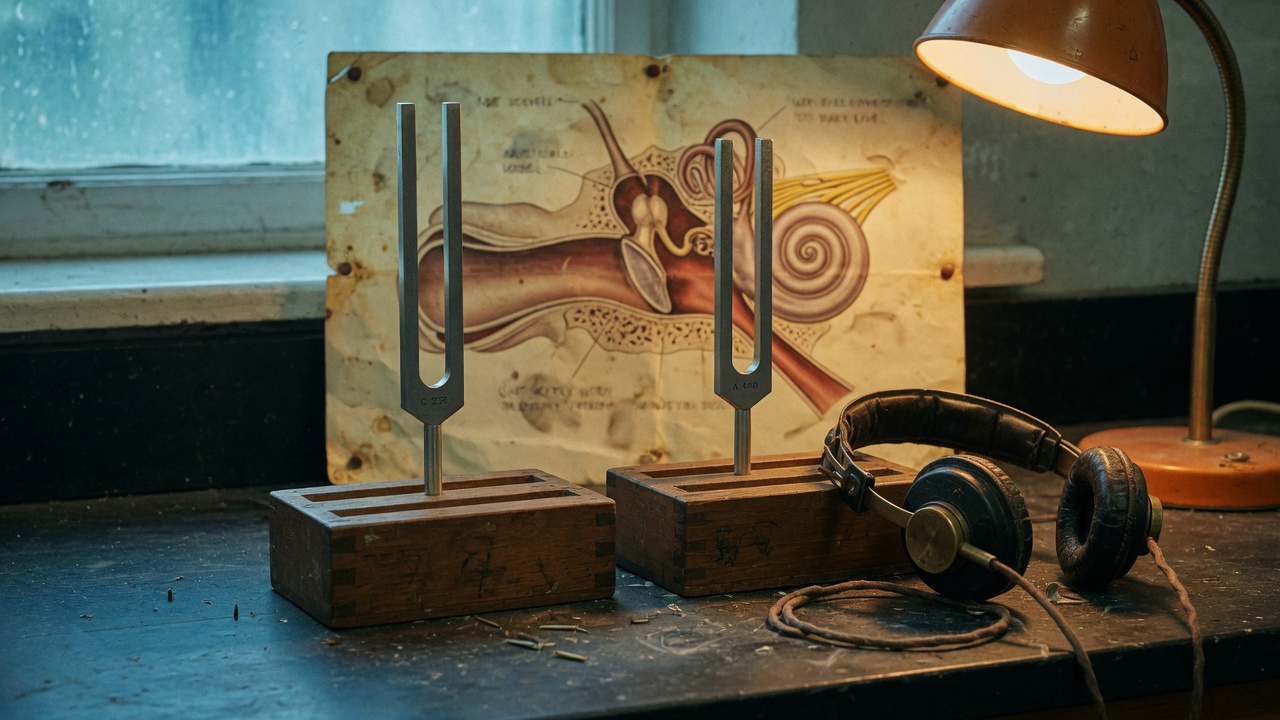
A binaural beat is not a third tone in the air. It is a percept generated when the two ears receive slightly different pure tones and the central auditory pathway compares them.
Classic reference: Oster (1973)
Oster, G. (1973). Auditory beats in the brain. Scientific American, 229(4), 94–102.
PubMed PMID 4727697
· DOI 10.1038/scientificamerican1073-94
Oster popularized the distinction between:
- Monaural / acoustic beats — physical interference of two tones before or at the ear; one ear is enough.
- Binaural beats — require both ears; the difference is computed inside the brain (brainstem / midbrain comparison circuits), not in the air.
Historically, related ideas appear earlier (e.g., Dove, 1839, on dichotic tones), but Oster’s article is the standard public-science citation for modern binaural-beat discussions.
What has to be true for a “true binaural” setup
- Independent left and right channels — stereo headphones or earbuds.
- Slightly different pure-tone carriers (or narrowband tones) per ear.
- Difference frequency usually in the EEG-relevant range (~1–40 Hz) so the perceived beat is slow enough to notice.
- No mono mix-down — speakers, Bluetooth mono modes, or “mono audio” accessibility settings destroy the interaural difference.
That is why every Binaural Beat Machine program page says headphones required.
Where in the pathway?
Neuroanatomy texts locate early binaural comparison in brainstem nuclei (including structures in the superior olivary complex and related pathways) that compute interaural time and intensity differences for sound localization. Binaural-beat perception is widely understood as a consequence of that comparison machinery operating on pure-tone inputs — not as a magical external “brainwave machine.”
Important: Perceiving a beat ≠ guaranteed cortical EEG entrainment at that exact frequency for every listener. Perception and large-scale cortical dynamics are related research topics, not the same measurement.
Practice on the free console
Open Console (true stereo) → · Plain-language how-it-works →
References
- Oster, G. (1973). Auditory beats in the brain. Scientific American, 229(4), 94–102. PMID 4727697
- Garcia-Argibay, M., et al. (2019). Efficacy of binaural auditory beats… Psychological Research. doi:10.1007/s00426-018-1066-8
- Site methodology: binauralbeatmachine.com/methodology
Educational only. Not medical advice. Headphones required for a true binaural beat. Individual responses vary.
Guides · Paper shelf · Console · Membership