Console · About · Articles · How binaural beats are generated
Engineering
How binaural beats are generated
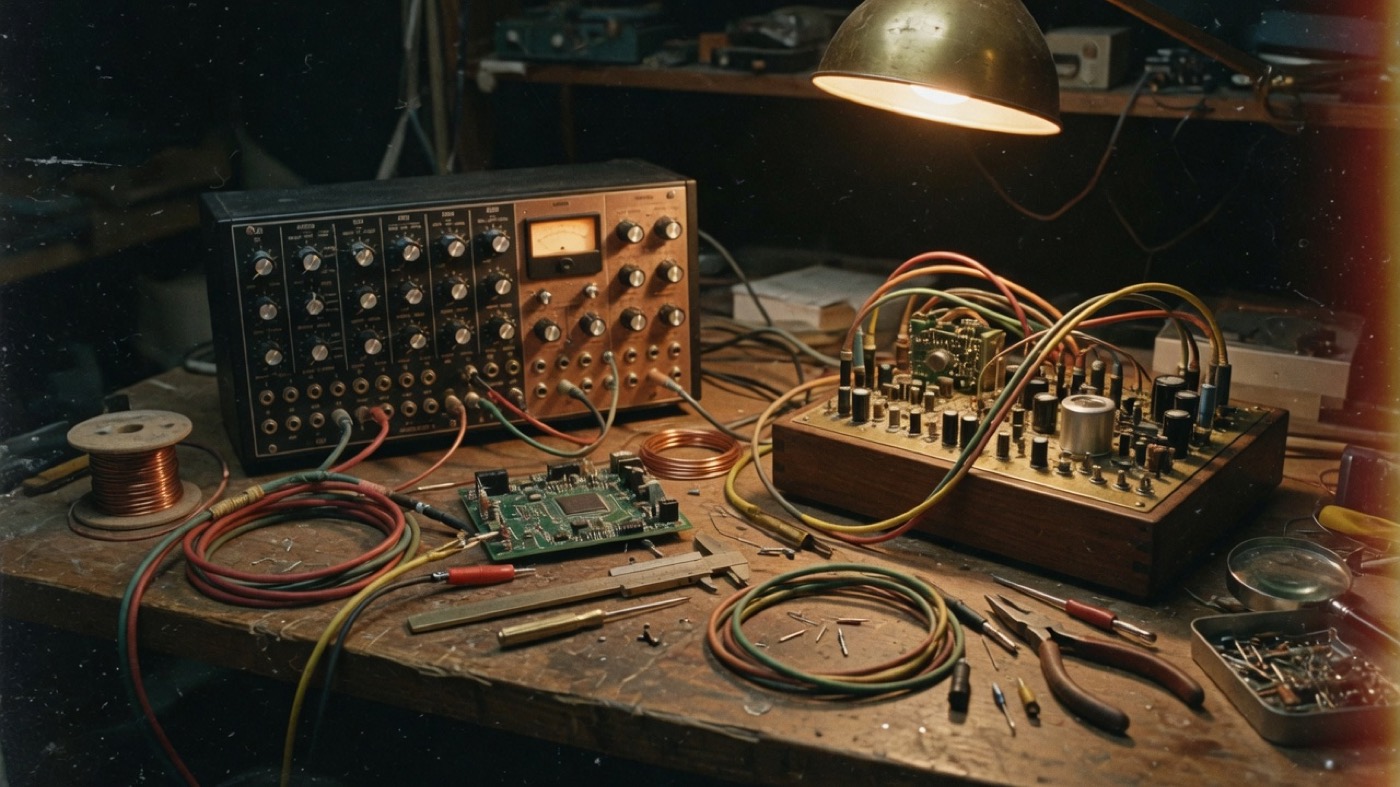
Two stable oscillators, hard-panned, a designed difference, true stereo to the ears. That is the whole instrument.
The honest answer
Generate two stable carriers, hard-pan them, set the difference, keep the path stereo to the eardrums. The beat is |fL − fR|. It is not a third oscillator. Speakers and mono fold-down end the experiment.
Two oscillators, one difference
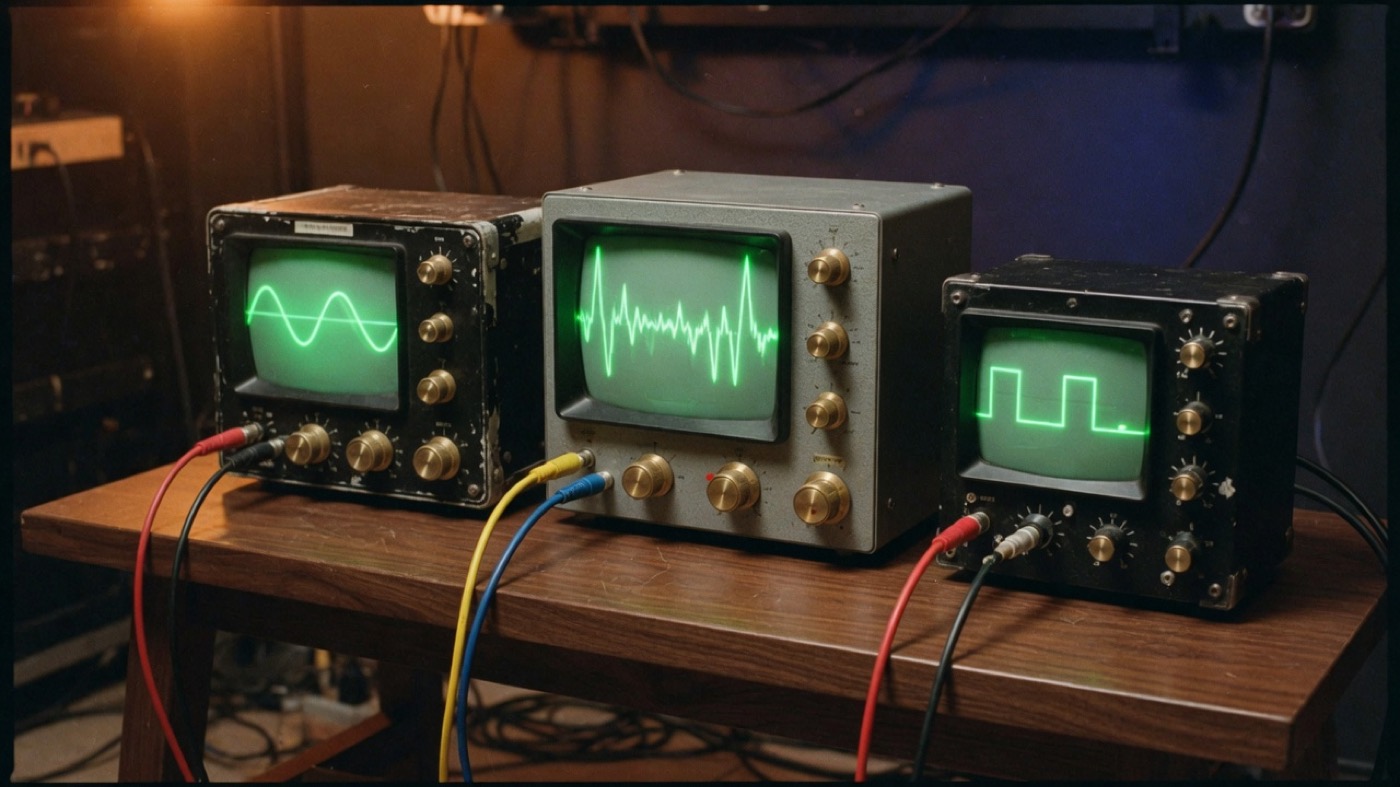
I generate binaural beats the way a console generates two tones: one oscillator for the left ear, one for the right, hard-panned, no clever third voice. The beat is not an oscillator. The beat is what your auditory system builds when those two frequencies disagree by a designed amount. If you can hold that sentence, you already own the instrument.
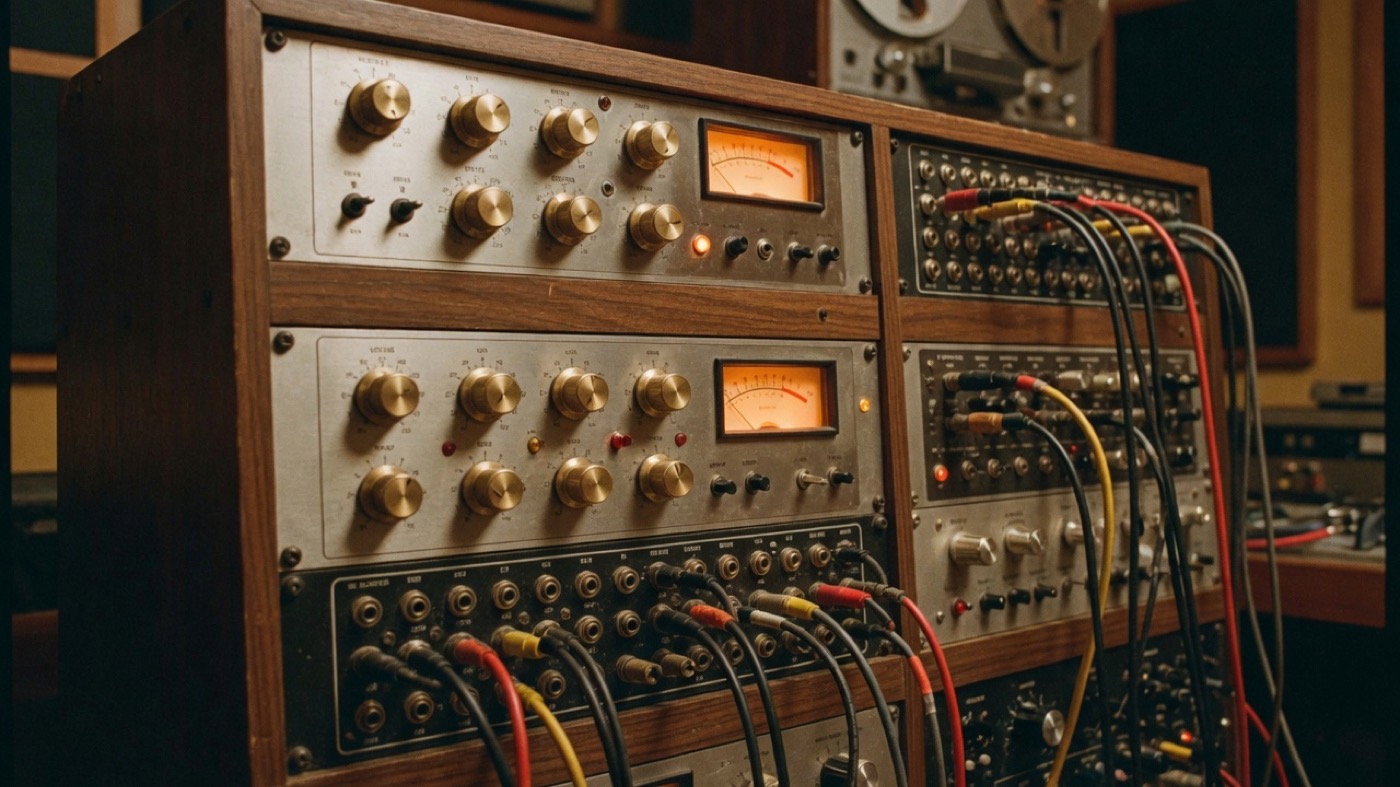
Analog equivalent: two stable oscillators, pan pots at the extremes, headphones on the cue bus. Digital equivalent: two Web Audio oscillators, destination left and right, a master with gentle limiting so a careless fader does not spit a peak. Same physics. Oster described the percept in 1973. Dove had dichotic tones in the nineteenth century. I am late to the party. I just kept the stereo path honest.
Two stable oscillators, hard-panned, a designed difference, true stereo to the ears. That is the whole instrument.
Definition and mechanism, in slower language: what are binaural beats and how they work. Engineering choices for this machine: methodology. If you want to hear it rather than read it, the Console is the live desk.
The only equation that matters
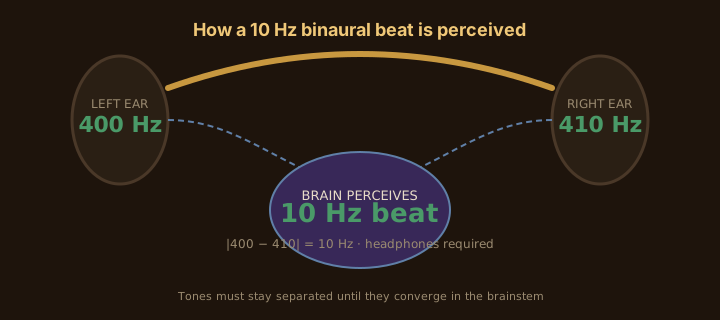
Let the left carrier be fL and the right carrier be fR. The designed beat is:
fbeat = |fL − fR|
Example: 200 Hz left, 210 Hz right, beat 10 Hz. Example: 200 Hz left, 240 Hz right, beat 40 Hz. The calculator at /tools/binaural-beat-calculator/ is this equation with a listen button. The waveform explorer is a picture. Neither tool is a third oscillator. Neither is the homepage Console.
I usually pick a carrier first for comfort — often in the low hundreds of hertz, where the binaural percept is historically stronger and the tone is listenable for a sit — then add or subtract the beat on one ear. Which ear is high does not encode a personality. Left-high versus right-high is a craft choice, not a hemisphere religion.
| Name | What it is | What it is not |
|---|---|---|
| Carrier | The audible tone in one ear | The “brainwave” |
| Beat | |fL − fR| | A third oscillator in the mix |
| Band label | A design target (delta…gamma) | A guaranteed EEG match |
| Master limiter | Gentle peak control | More entrainment |
Hard pan, sample rate, no mono fold-down
Hard pan means the left oscillator is not leaking into the right cup, and vice versa. In a DAW that is a pan law at the extremes. In Web Audio it is a stereo destination with one oscillator connected to the left channel and one to the right. If a shared node sums them before the headphones, you have built a monaural beat: two tones already mixed, amplitude interference in the waveform. That can be a useful sound. It is not binaural.
Sample rate: 44.1 kHz or 48 kHz is lavish for carriers in the hundreds of hertz. Nyquist is not the villain in this genre. The villains are mono fold-down, Bluetooth devices that decide you wanted a speaker, “mono audio” accessibility switches left on, and video encodes that collapse a pair into a loud, impressive, wrong object. Carrier stability matters more than a boutique sample rate. A drifting oscillator makes a wandering beat. Web Audio oscillators are numerically stable for this work. Analog oscillators need to be the grown-up kind, not a toy kit that sags when the room gets warm.
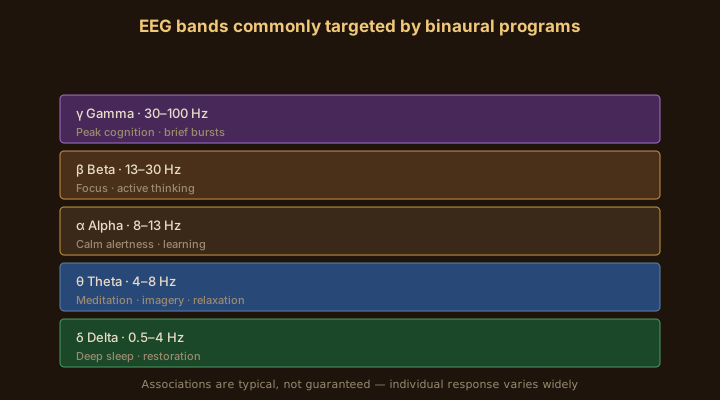
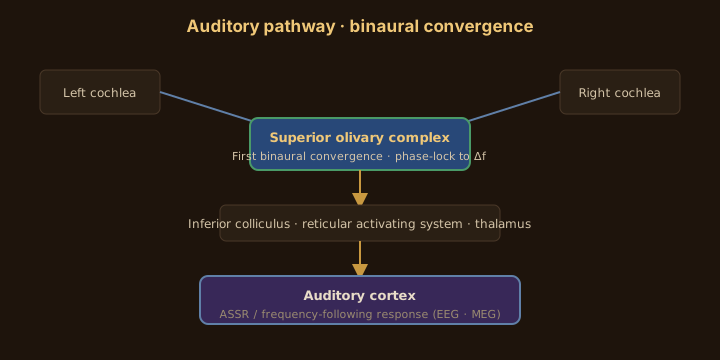
Phase is the quiet character in this play. A binaural beat is an interaural frequency difference. Because the two sines run at different rates, their relative phase is continuously walking. Brainstem nuclei that compare ears — the superior olivary complex is the textbook first meeting — live on those comparisons. You do not have to “set the phase” like a mastering engineer lining up a kick. You have to not destroy the isolation that lets phase keep walking.
Why speakers fail
Speakers put both carriers into the same air. The waves meet before they meet your ears. You may hear an acoustic beat — a physical loudness pulse — which is a guitar-tuner phenomenon, not a binaural one. You may hear a smear. You will not get the isolated-difference experiment this console is built for. One-ear listening fails for the same reason: there is nothing to compare.
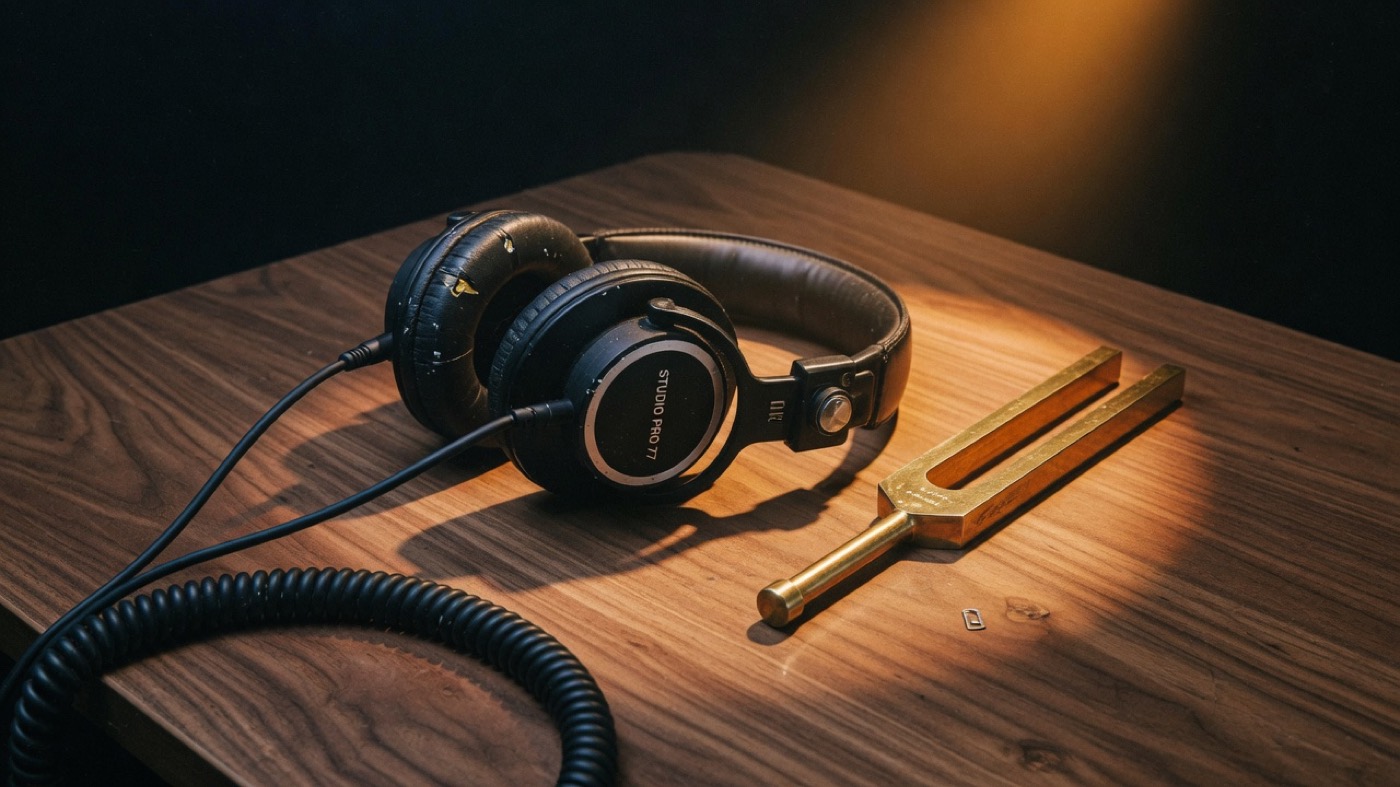
Car audio is not binaural. A phone on a table is not binaural. A laptop with one working driver is not binaural. I have watched people argue with the Halt button because “I don’t hear the pulse.” They were in a kitchen. The kitchen was loud. The speakers were doing their job: mixing. Headphones are not branding. They are the method. See the headphones guide for isolation and comfort, not jewelry.
If the pulse is absent: check stereo before you hunt a more magical hertz. Mute one cup. You should hear one tone. If both ears still sing, the path is not the instrument you think it is.
Web Audio, analog equivalent, gentle limiting
In the browser, OscillatorNode objects run at the audio context’s sample rate. I set frequency with numbers, not with a wavetable that drifted through a transcode. The left and right paths stay separate until the hardware DAC. Then the headphones keep them separate until the eardrums. That is the chain. Anything that sums early — a mono send, a “spatial” enhancer that is actually a collapse, a video export set to mono — ends the experiment.
Gentle limiting on the master is housekeeping. Pure tones have a crest factor that can click when you ENGAGE if the edge is square. A limiter that kisses peaks is not “more signal.” It is not a medical feature. It is so a careless volume gesture does not spit. Methodology says the same: meters, a kind master, no harsh peaks as a design goal.
I do not add a third oscillator at the beat frequency. That is a common amateur move: “I want them to hear 10 Hz, so I will also play 10 Hz.” Ten hertz is not an audible tone in the musical sense for most playback chains, and even if you amplitude-modulate a carrier at 10 Hz you have built isochronic or monaural furniture, which is a different inquiry on this desk. Binaural means the difference is not in the room. It is in the comparison.
Two isolated carriers. Beat equals the absolute difference. Headphones required. Speakers mix the experiment away.
Web Audio and analog dual-oscillator cue feeds can both realize the pair if the stereo path stays clean. Modest carriers favor the percept (Oster).
How much EEG follows a given consumer pair (Jirakittayakorn/Wongsawat versus López-Caballero & Escera 2017). Outcome sizes in Garcia-Argibay 2019 are modest and heterogeneous.
A third oscillator “for the beat.” Mono generators. The idea that a boutique sample rate is the secret, or that limiting is entrainment.
Oster, G. (1973). Auditory beats in the brain. Scientific American, 229(4), 94–102. Garcia-Argibay et al. (2019), 22 studies, 35 effect sizes, g ≈ 0.45, DOI 10.1007/s00426-018-1066-8. López-Caballero & Escera (2017). Jirakittayakorn & Wongsawat — specified-rate EEG designs.
Mistakes I still see on workbenches
People add chorus, “3D” wideners, or a stereo imager on the master and then wonder why the beat got watery. Those processors are in the business of correlating and decorrelating channels. They are allowed on music. They are vandalism on a dichotic pair. People bounce to MP3 at a radio preset and then upload a “generator.” People put both oscillators on a stereo track and pan with a law that never quite reaches the extremes, so each ear gets a little of the other. That little is enough to grow an acoustic beat on top of the binaural one. You will hear something. You will not know which instrument you built.
People also chase ultrasonic carriers because a forum said the brain likes what it cannot hear. Oster already told the public that the percept prefers modest, audible carriers. A tone you cannot sit with is a bad carrier. A tone you cannot hear is not a secret door. Stay in the range where you could sing the pitch if you had to. Then set the difference. Then leave it alone for the length of the sit.
Clocking and buffer size are DAW superstitions that rarely matter at these frequencies. A stable oscillator at 48 kHz, 128 samples, is not a spiritual compromise. Dropouts matter. Clipping matters. Mono mixdowns matter. If your session is clean, the pair is the pair. I have generated this instrument on analog oscillators, on hardware synths hard-panned to a headphone amp, and in Web Audio. Listeners who know the percept recognize it in all three. Listeners who wanted a miracle do not, in any of the three.
Garcia-Argibay’s pooled map (22 studies, 35 effect sizes, g ≈ 0.45) is about outcomes, not oscillators. López-Caballero and Escera is about EEG power that did not rise. Jirakittayakorn and Wongsawat is about specified-rate lab listening. Generation is upstream of all of that. You can generate a perfect pair and still have a mixed literature. That is not a reason to generate a sloppy pair.
That is how they are generated here. Two oscillators. One difference. A master that behaves. A Halt. If you want a playlist, there are playlists. If you want the instrument, ENGAGE is free. Headphones on, numbers in the open, stereo path intact. That is the whole craft I can honestly sell from this bench. Keep the path stereo. Keep the numbers visible. That is enough.
What we still do not know
We still argue, in the literature, how far a clean pair moves cortex versus how far it moves expectation. Generation is the easy part. I can guarantee the frequencies. I cannot guarantee your Tuesday EEG. That gap is why this desk stays an engineering desk.
Questions operators actually ask
What is the formula for a binaural beat?
f_beat = |fL − fR|. Left 200 Hz and right 210 Hz make a 10 Hz beat. The beat is the difference, not a third tone in the mix.
Do you generate the beat with a third oscillator?
No. Two oscillators, hard-panned. Adding a third voice at the beat rate builds a different signal, closer to isochronic or monaural furniture.
Why do speakers fail?
Speakers mix both carriers in the air before they reach you. The intended isolated difference never arrives. You may hear an acoustic beat instead. Headphones are the method.
Does sample rate matter?
44.1 or 48 kHz is plenty for carriers in the hundreds of hertz. Stability and stereo integrity matter more than boutique rates. Mono fold-down ruins more sessions than Nyquist ever will.
Is the Web Audio console the same as analog oscillators?
Same physics: two stable sources, hard pan, designed difference. Analog needs oscillators that do not drift. Digital needs a path that does not sum to mono.
What does the limiter do?
Gentle peak control so ENGAGE does not spit. It is housekeeping, not a clinical feature, and not “more entrainment.”
Where can I see the left and right numbers?
The beat calculator under /tools/. The Console is the live instrument. Methodology explains the master path in engineering language.
Keep reading
Educational listening notes from a working audio engineer. Not medical advice. Not a medical device. Headphones required for a true binaural beat. Methodology · About · Garcia-Argibay 2019