Astral AP-05
AP-05 // Phase
AP-05 // PHASE — short deferred-method support after an awakening. Raduga’s taxonomy as culture, not as a guarantee. Useful as a description of what people already do. Not “three days.”
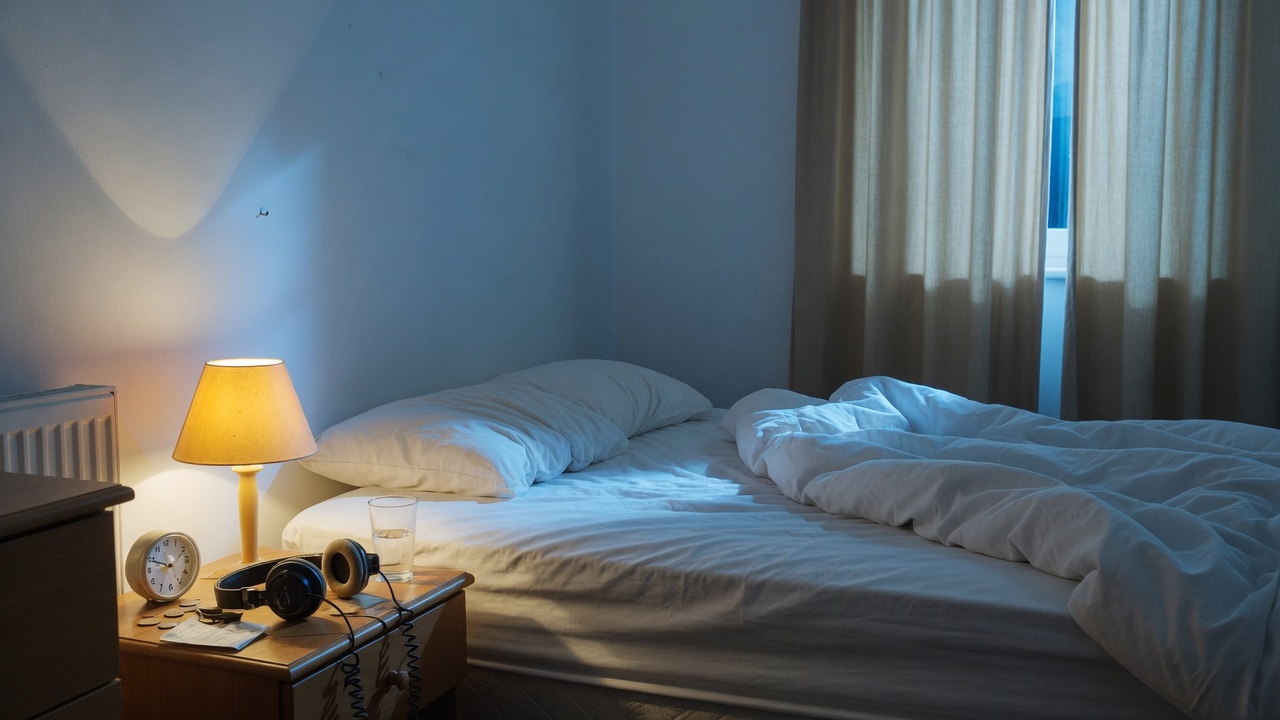
What Phase means on this desk
Michael Raduga’s The Phase treats lucid dream, out-of-body report, and adjacent sleep-edge states as one trainable “phase” of consciousness, with a family of indirect (deferred) methods after awakening: wake, do not fully arouse, attempt a method — roll, rope, stand, listen, phantom movement — return if it fails, attempt again while the window is open. As a description of what practitioner culture already does at 4 a.m., the family is real. As a laboratory standard, it is not. As a three-day guarantee, it is a training advertisement. This desk will not publish that advertisement as a result.
What AP-05 is: a short frame for an operator who woke, who is still near sleep, and who wants to attempt a deferred method without pretending the taxonomy has settled the science. What it is not: a BBM invention of the method family. A promise. A substitute for AP-02 WBTB when the real issue is the sleep schedule — Safety still owns WBTB, and this door does not get you around sleep debt by renaming it. Not a clinical treatment. Not a claim that you will leave your body. Not a license to erase the distinctions the lab still needs.
A practitioner umbrella, labeled
On Semantics, “the Phase” is Raduga’s umbrella: useful as taxonomy, dangerous if it erases distinctions. Papers on this desk keep OBE, lucidity, and sleep paralysis as overlapping domains. Moix, Baldaccini & Isern (2025) note that paralysis and lucidity can facilitate OBEs for some people; they do not collapse the three into one trainable object. Use Raduga’s map for deferred-attempt culture. Use the lab’s when reading a trial. Schools.
Indirect methods start from an awakening. Direct methods try from ordinary wakefulness. The distinction is operational. A deferred attempt uses a waking you already have — natural, WBTB, a noticed false awakening. LaBerge (1981, 1985) made lucidity experimentally addressable; Stumbrys et al. (2012) reviewed induction tools. Neither paper is a phase-training manual. Sleep. Stumbrys 2012.
How to run a deferred attempt
You wake. You do not sit up, unless sitting up is the safety move. You do not start the day. You do not grab the phone. You notice whether you can still fall toward sleep. If you are fully ordinary — lights, plans, the day’s first sentence already running — this window is closed. Write that. Do not force a method into a waking that has already become morning.
If the window is open, pick one method verb you named in advance, not three. Roll. Rope. Stand. Listen for the room. Move a phantom limb. The Methods encyclopedia lists these as cards with failure modes; this door does not reprint a school’s full drill. Attempt briefly. If nothing shifts, stop the attempt and let sleep take you, or sit up and run Return. Cycling a method into frustration is not persistence. It is how an operator manufactures insomnia and then calls insomnia a technique.
If something shifts — a change in the felt location of “here,” lucidity in a dream, paralysis, a hypnopompic image — observe. Do not immediately baptize it with the school’s word. Stabilize only if you are not in terror. If you are in terror, sit up. Lights. Name the room. The session is over. You do not complete a separation through panic because a taxonomy said the window was open.
When the attempt ends, run AP-06 Return. Rapid decay is ordinary sleep-edge memory. Notes while warm, or the night becomes a story fitted to a book.
Audio, and what it is not
AP-05 is not a third long program. If audio is used at all, keep it short and already published: the WBTB bed after a planned wake window (~80 Hz · 7 Hz · ~15 min, then off), or silence if the waking was spontaneous and you are still near sleep. Do not put on a 55-minute path after a 4 a.m. awakening unless you have chosen AP-03 as the night’s experiment and the morning can hold it. Do not invent a “phase frequency.” There isn’t one on this desk. Headphones if tones are on; Oster’s dichotic requirement does not take a night off because the method is deferred. Binaural history.
If the night was a planned WBTB, you are already on AP-02’s door, and you should say so. AP-05 names the method family after the awakening. AP-02 names the schedule that produced the awakening. Mixing the labels until the journal cannot say which experiment you ran is how taxonomies become fog.
What to journal
How you woke: natural, alarm, WBTB, false awakening, paralysis. How aroused you were, in ordinary words. Method verb actually used, not the list you meant to cycle. Audio yes/no and which bed. Sensations. Experience class in lab language if you can (lucid dream, OBE-like report, paralysis, hypnopompia, mixed, ordinary sleep, ordinary waking), and Raduga’s word only in the interpretation sentence if you must use it. Confidence. Whether you sat up for safety.
Interpretation in a separate sentence. “I rolled and the room turned” is a report. “I entered the phase” is a school’s sentence. “I independently perceived the apartment” is a claim. Keep them apart. How to write the document type: Field reports. Motifs you may meet: Phenomenology.
Failure modes and the advertisement
The three-day frame, treated as a result. This desk will say it once, as a refusal: Raduga’s training culture advertises speed. We do not convert that advertisement into an outcome you should expect, and we do not convert a slow week into a personal defect. Sleep debt stacked to make more awakenings. Forcing methods after the window has closed. Cycling five verbs in a panic. Treating paralysis as “almost there” when the person — you — is terrified. Coaching a partner through terror. Running this door to avoid Safety’s WBTB limits. Speakers. Unnamed audio. Skipping Return because “I’ll remember the phase.” You will not, not in the way a notebook would.
Do not use the umbrella to erase lucidity research, or lucidity research to sneer at deferred-method culture. Doctrine: Start Here. Standing rules: Safety. Do not run this if you must drive. Stop if distressed. Phase is right when you woke near sleep and can name one method. It is wrong when you want a guarantee, or a schedule’s costs without the schedule’s name.
ENGAGE Phase on the Experience tab
Bibliography
- Raduga, M. The Phase — practitioner taxonomy and deferred-method culture; not a laboratory standard; the three-day frame is a training claim, not a result on this desk.
- Stumbrys, T., Erlacher, D., Schädlich, M., & Schredl, M. (2012). Induction of lucid dreams: a systematic review of evidence. BBM reading
- LaBerge, S. P., Nagel, L. E., Dement, W. C., & Zarcone, V. (1981). Lucid dreaming verified by volitional communication during REM sleep. Perceptual and Motor Skills, 52(3), 727–732. BBM reading
- LaBerge, S. (1985). Lucid Dreaming.
- Moix, J., Baldaccini, S., & Isern, M. (2025). Out of body experiences: scoping review. EXPLORE, 21(4), 103196. PMID 40540759
Educational only. Not medical advice. Headphones required for a true binaural beat. Not affiliated with the Monroe Institute. Experience is not interpretation is not a scientific claim.