Field Manual · Complete briefing
History and Science of Binaural Beats
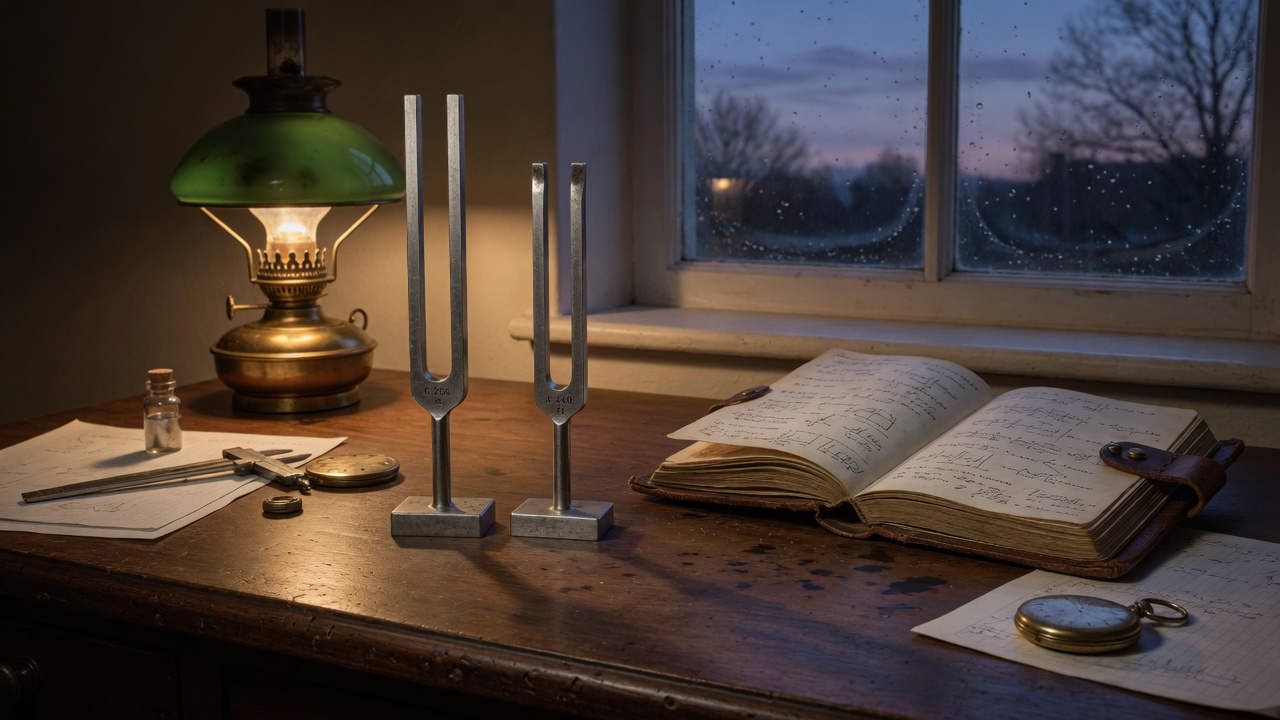
Dove in 1839. Oster in 1973. The percept is real. The marketing is not. This is the full briefing — then a true-stereo beat on the Console, headphones on.
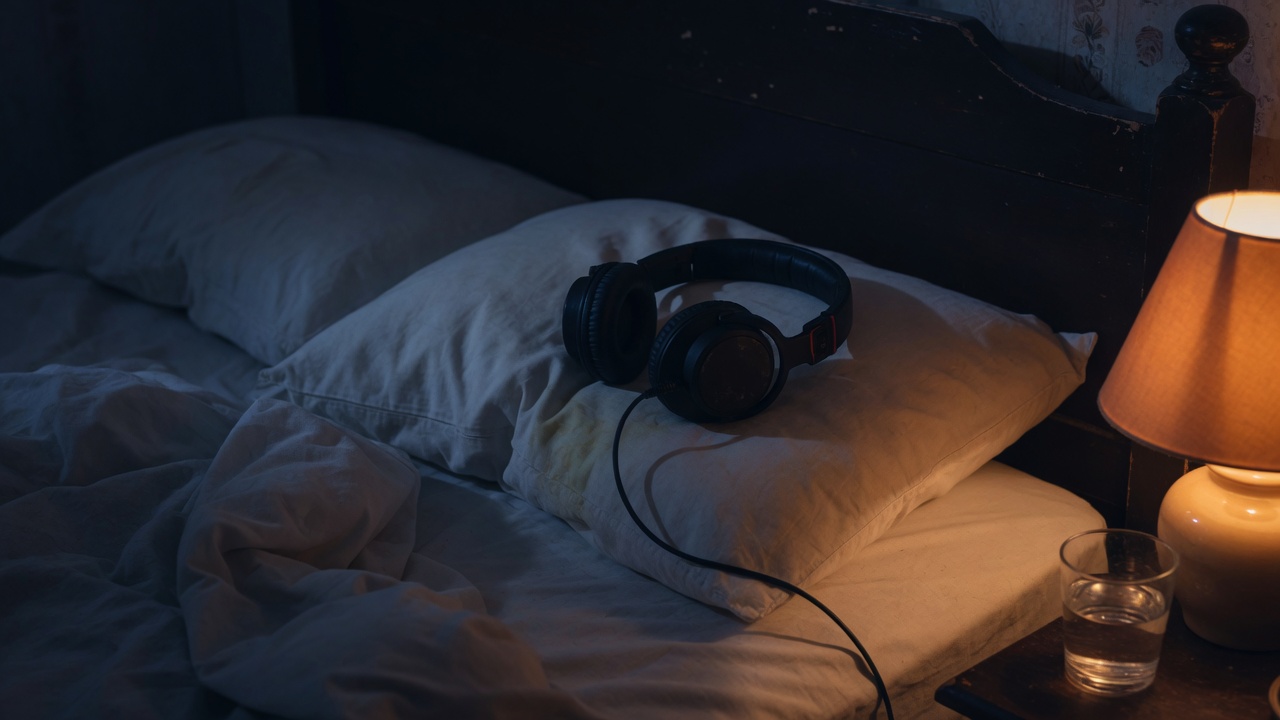
◈ Headphones required. Binaural beats only work when each ear receives a different carrier tone in isolation. Speakers, mono playback, or one-ear listening will not produce the effect.

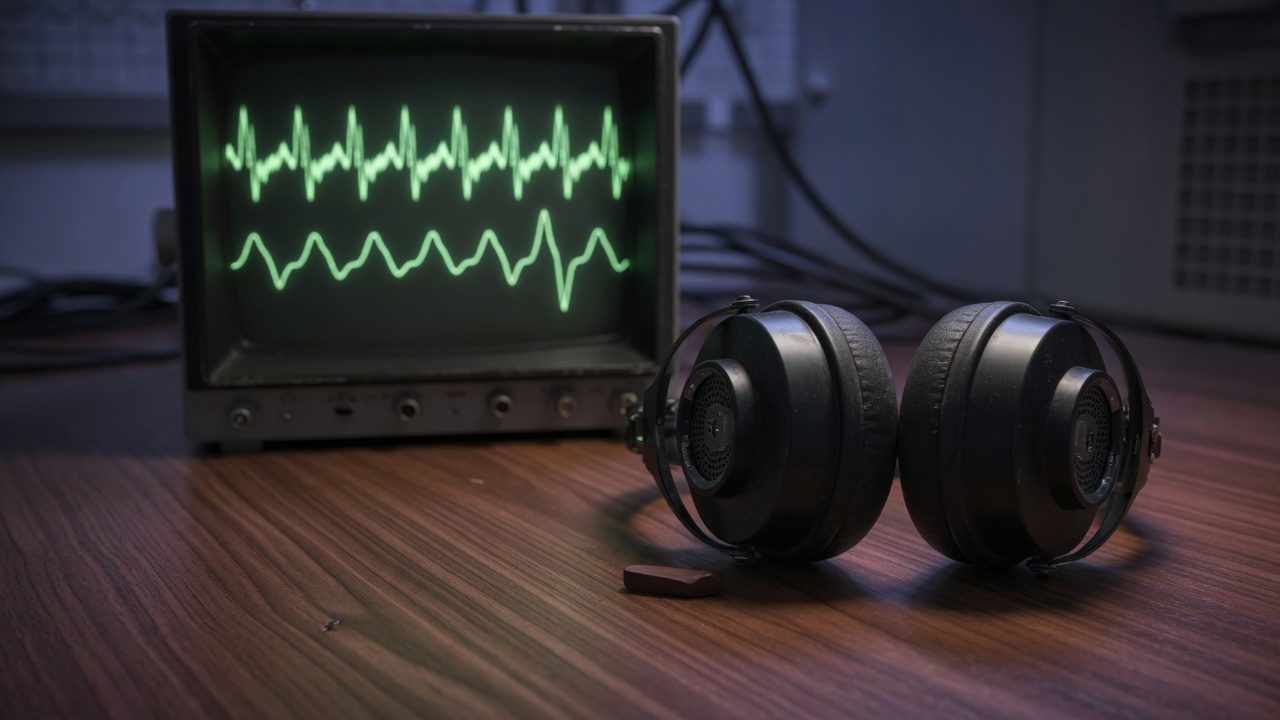
Figure 1 — The perceived beat equals the frequency difference between ears.
What are binaural beats?
Binaural beats (also called binaural tones) are a real auditory illusion — an apparent “third” pulsing or beating sound that your brain creates when it receives two slightly different pure tones, one in each ear, through stereo headphones.
For example: play a steady 400 Hz tone in your left ear and a 410 Hz tone in your right ear. You will not hear two separate tones. Instead you perceive a single pulsating tone at roughly 10 Hz (the difference) that seems to come from inside your head and may even feel like it moves between your ears.
This only works with headphones (or perfect dichotic separation). Speakers or one-ear listening kills the effect because the tones must stay completely separated until they reach your brain.

Figure 2 — Monaural beats are physical; binaural beats are central (brain-generated).
This is not the same as monaural (acoustic) beats, where two tones physically mix in the air or in one ear and create actual amplitude interference — like when tuning a guitar. Binaural beats are a purely central nervous system phenomenon. No physical sound wave mixes in the air or in the cochlea.
Mechanism
Binaural beats are processed in the superior olivary complex (SOC) in the brainstem — the first place where signals from both ears converge. This region is specialized for sound localization: detecting tiny interaural time and phase differences to tell where a sound is coming from in three-dimensional space.
Neurons here phase-lock and fire action potentials synchronized to the frequency difference, creating the illusory beat percept. The signal then travels to the inferior colliculus, reticular activating system (which modulates arousal), thalamus, and auditory cortex, where it can produce measurable auditory steady-state responses (ASSR) or frequency-following responses (FFR) in EEG and MEG recordings.

Figure 3 — Binaural convergence begins in the superior olivary complex.
Mathematically, if the left ear receives frequency fL and the right ear receives fR (with |fL − fR| < 30 Hz and carriers typically 200–1000 Hz, optimal around 400 Hz), the perceived beat frequency is:
fbeat = | fL − fR |
The brain treats this difference as a real low-frequency rhythm.
The brainwave entrainment hypothesis proposes that a sustained beat in the EEG range (about 1–40 Hz) can drive cortical oscillations toward that frequency. It is a hypothesis, not a brand. Frequency-following responses can be measured; a playlist does not therefore “put you in theta.”

Figure 4 — Common brainwave band associations (individual results vary).
| Band | Range | Common associations |
|---|---|---|
| Delta | 0.5–4 Hz | Deep rest, sleep descent — a design target, not a guaranteed EEG state |
| Theta | 4–8 Hz | Meditation, imagery, relaxed inner work — associations, not a prescription |
| Alpha | 8–13 Hz | Calm alertness, relaxed focus, learning, light meditation |
| Beta | 13–30 Hz | Active thinking, concentration, alertness (higher ends can feel anxious) |
| Gamma | >30–100 Hz | High-level cognition, insight, binding of perception, peak focus |
Often, tracks embed the beats in pleasant music, pink or white noise, or isochronic tones (regular pulses in one ear) for better tolerability. Perception varies: some people are highly sensitive, others perceive weak or no effect (for example, linked to neurological conditions like untreated Parkinson’s in early studies). Women showed cycle-related differences per Oster.
Complete history

Figure 5 — From binaural hearing science to modern entrainment tools.
- Precursors (late 1700s–early 1800s) — Studies on binaural hearing (how two ears enable 3D sound location) by William Charles Wells (1792, analogized to binocular vision), Giovanni Battista Venturi (1796–1802 experiments), and Somerville Scott Alison (1859, invents the differential stethoscope and coins “binaural”).
- 1839: Discovery — Prussian physicist and meteorologist Heinrich Wilhelm Dove publishes the first clear description in Repertorium der Physik. Using tuning forks routed separately to each ear, he notes the illusory beats can only arise in the brain and auditory nervous system, with no physical mixing possible. It remains a scientific curiosity for over a century.
- Late 19th–mid-20th century — Sporadic research focused on acoustics, sound localization (Lord Rayleigh, Stumpf 1916 distinguishes dichotic listening), and theoretical limits. Considered mostly a curiosity or special case of monaural beats.
- 1950 — J.C.R. Licklider and others map frequency limits and neural volley theory for how synchronized auditory nerve activity produces the effect.
- 1960s — Animal (cats) and human studies (Wernick & Starr 1968) confirm brainstem and cortical involvement.
- 1973: Modern revival — Biophysicist Gerald Oster publishes the landmark “Auditory Beats in the Brain” in Scientific American. He synthesizes 134 years of scattered work, adds new experiments, highlights differences from monaural beats, notes carrier frequency limits (roughly <1000–1500 Hz), and proposes binaural beats as a powerful tool for neuroscience (sound localization, “cocktail party effect”) and medical diagnostics (for example, some Parkinson’s patients could not perceive them until treated; possible estrogen and menstrual links in women). This article explodes interest.
- 1950s–1990s: Civilian audio school — Radio executive Robert Monroe experiments with sound for sleep and learning, then — after Oster — develops Hemi-Sync: layered binaural beats plus noise and guided audio, with numbered “Focus” states. He founds The Monroe Institute (Virginia), a still-operating unaffiliated civilian school. Influence is not ownership. This console is not that product, and FOIA interest in Gateway-era audio is historical reading — not a claim that consumer headphones recreate a classified program.
- 1990s–present — Digital boom: CDs, apps, YouTube, “digital drugs” and i-Doser. Explosion of wellness tracks, clinical trials (cognition, anxiety, pain, sleep, anesthesia), EEG, fMRI, and MEG studies, and systematic reviews. Combined often with isochronic tones or music. Ongoing research into neurotech integration and personalized use.
Evidence, not slogans
The percept is solid. Behavioral and EEG effects are mixed. That is the whole epistemic posture of this site.
A 2023 systematic review of 14 EEG studies on “entrainment” found 5 supportive (power increases in targeted bands), 8 contradictory, and 1 mixed — methods wander (different frequencies, durations, analyses, and controls).
Meta-analyses (including Garcia-Argibay 2019) report small-to-moderate average effects on some cognition, anxiety, and pain measures — heterogeneous protocols, not a single recipe. Placebo, expectation, and individual differences are part of the data. This is not a medical device, not a cure, and not a guaranteed EEG lock.
Consumer listening is not a controlled research protocol. Individual responses vary. Use comfortable volume. Do not listen while driving or operating machinery. If you have a medical condition, that is a clinician’s question — not this console’s.
Practical use and how to try it
- Requirements — Good over-ear or in-ear stereo headphones (mandatory). Sessions of 10–60 minutes. Start at low volume.
- Typical design targets — Theta (4–8 Hz) for meditation and wind-down; alpha for calm study; delta for sleep-oriented sessions; gamma for brief cognitive work. Bands are labels on the Console, not proof of an EEG state.
- Where to run a true-stereo session — This Console. Carriers and beat offsets are generated in the browser, one ear each, with a signal monitor. Look for a stated carrier and beat — not a YouTube caption.
- Tips — Results are highly individual. Track duration, band, and what you actually did with your attention. Do not treat a session as a protocol from a paper unless you matched the paper.
Using Binaural Beat Machine
This console applies the same principles: sub-octave carriers, guided program phases that crossfade through alpha, theta, delta, and beta targets, and a signal monitor showing carrier, beat, and ear frequencies in real time. Put the headphones on. Press ENGAGE.
Summary
The percept is certain. Outcome claims are mixed. Dove described the beat; Oster put it back on a scientist’s desk; Monroe built a civilian school around layered audio. Influence is not ownership. This console is an independent true-stereo instrument.
Read the research. Understand the limits. Run the instrument.
Next: Oster 1973 · 2023 EEG review · Garcia-Argibay 2019 · Methodology.