Purpose · Sleep
Binaural beats for sleep
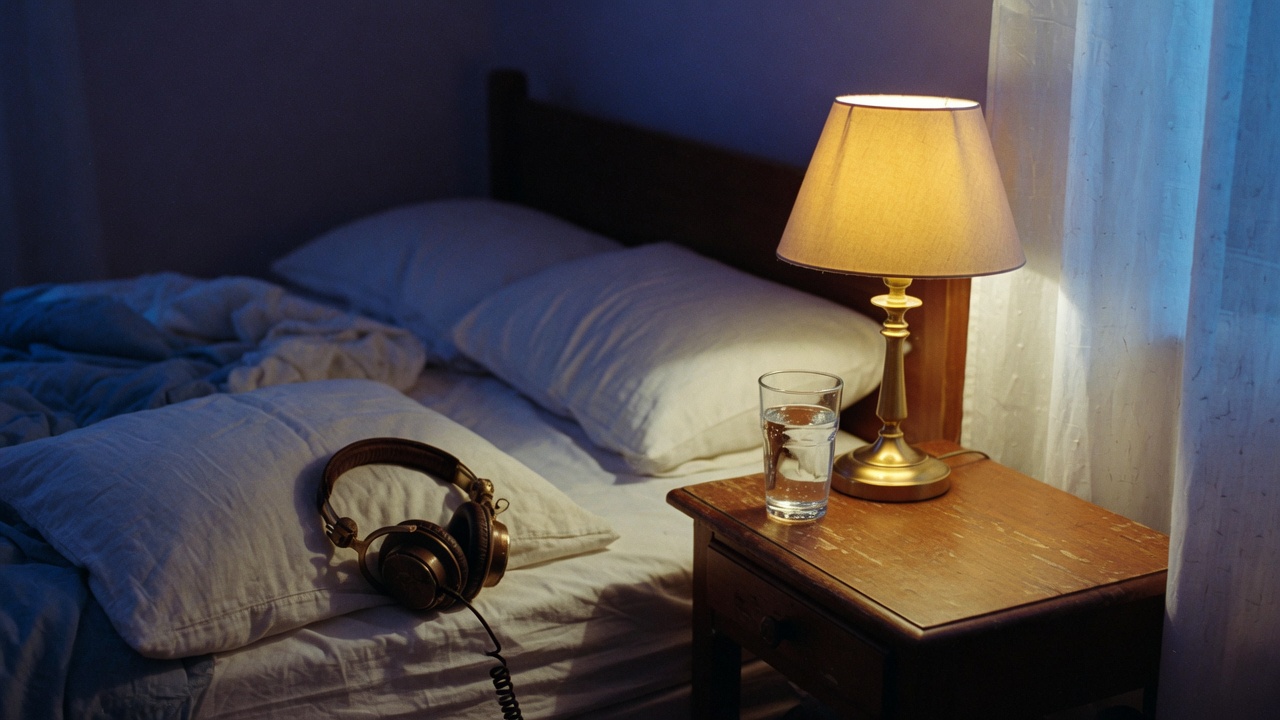
Two tones. One in each ear. The slow difference is the beat — a wind-down ritual, not a cure for insomnia.
Headphones on · volume low enough to fall asleep safely · not a medical sleep treatment.
Not the Monroe Institute, not Hemi-Sync, not Gateway training.
20-minute wind-down
- T−20 min Dim lights. Phone face-down.
- Headphones A volume you could ignore — not a concert.
- Theta ~6 Hz A few minutes if you still feel wired. Use the wind-down chip above.
- Delta ~1.5–2.5 Hz Settle as breathing slows. Deep rest is the default on this page.
- Stop or fade Jaw tension, ear fatigue, restlessness — silence is fine.
- Prefer over-ear headphones if you may doze with them on; keep volume low.
- Avoid deep-rest sessions while driving or doing anything unsafe.
- Pair with light hygiene and a fixed bedtime more than with “magic Hz” hunting.
Answer
Binaural beats for sleep are stereo tones designed so the difference between left and right ears sits in a slow range often associated with rest (commonly theta into delta). They can support a wind-down ritual — they are not a proven cure for insomnia.
Best use: low volume, headphones, dim light, and a consistent pre-sleep routine. If sleep problems are chronic, see a clinician.
Explain
In consumer audio, “sleep binaural beats” usually means a beat frequency that moves toward roughly 0.5–4 Hz (delta) or spends time in 4–8 Hz (theta) during the drowsy border. That number is a design target, not a guarantee your EEG will match a lab recording.
Evidence posture: some small studies and meta-analyses explore sleep quality or anxiety with binaural audio; results are mixed and often modest. Expectation, volume, and routine matter. Treat listening as a comfort practice, not medicine.
Related: Delta waves · Sleep research notes · Science on the Console.
Explore
Continue
When you want a full timed journey with phases, open the free Deep Sleep program on the Machine, or browse all sleep programs.
Scientific & safety notes. Binaural listening is a consumer audio experience. Distinctions used on this site: established evidence vs preliminary research vs hypothesis vs user experience. We do not claim that a frequency cures or treats medical conditions. Do not use deep-rest audio while driving or operating machinery. Keep volume comfortable.