Console · About · Articles · Are binaural beats safe?
Safety
Are binaural beats safe?
They are audio. Treat them like audio: moderate volume, stereo headphones, stop if it feels wrong. Not a medical device.
The honest answer
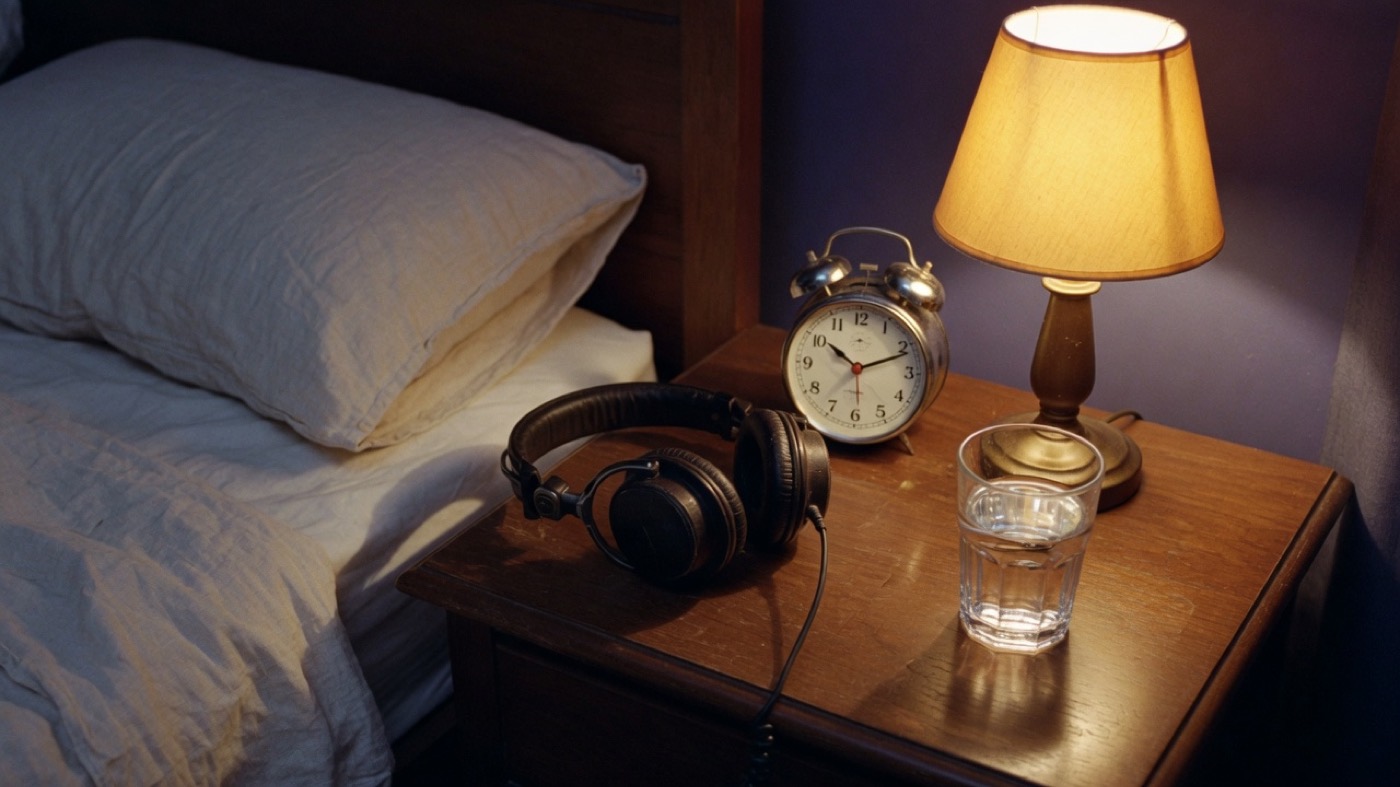
Not a blanket yes. Not a scare. They are audio: moderate volume, stereo headphones, Halt if headache, agitation, or nausea shows up. Not a medical device. Photosensitive and seizure-prone listeners should talk with a clinician. Kids: adult-supervised, never a babysitter.
Audio, not a medical device
I will not tell you binaural beats are 100% safe. I will not tell you they are dangerous magic. They are audio. Treat them like audio: moderate volume, stereo headphones, a length you chose, Halt if the hour turns wrong. This console is a consumer stereo instrument in a browser. It is not a medical device. It does not diagnose, and it does not stand in for care. The short myth door is medical device confusion. Methodology says the same in engineering language: methodology.
They are audio. Treat them like audio: moderate volume, stereo headphones, stop if it feels wrong. Not a medical device.
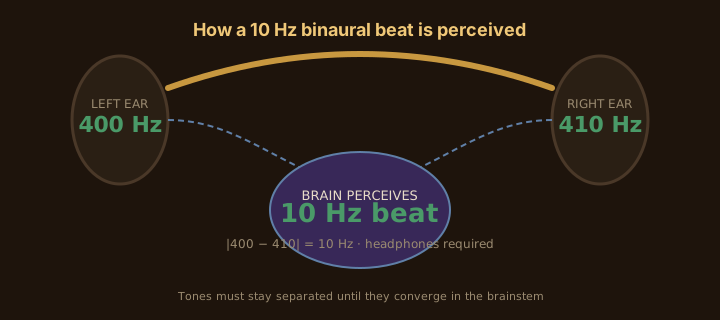
Headphones are required for a true binaural beat. That is mechanism, not a lifestyle brand. Speakers mix the carriers. One-ear listening leaves nothing to compare. If you want the definition first: what are binaural beats and how they work.
Volume: the risk that is not mystical
Louder is not more “entrainment.” Louder is more risk. The beat is a difference between ears, not a sound-pressure contest. If you cannot hear the pulse, check stereo before you crank — mono fold-down is a common fake emergency. The myth door is louder is better.
Hearing conservation numbers exist so workplaces do not ruin ears on a schedule. WHO and NIOSH both treat about 85 dBA over eight hours as a common occupational reference for noise exposure. That is not a target for a wellness sit. Consumer listening should be comfortably quiet — a level you could almost ignore, a level you could hold a conversation over. Cumulative exposure is the adult fact. A two-hour study drone at a foolish level is still a foolish level if the caption said “focus.”
Extreme carriers are a different dare: very high pure tones fatigue and annoy; very low ones can be more tactile than musical and may not carry a clean beat. Stay where the tone is listenable. Dangerous extreme carriers is the short version. Comfort is the range. ENGAGE is not a pain practice.
| Rule | Practice | Why |
|---|---|---|
| Volume | Comfortably quiet; not an 85 dBA shift | 85 dBA/8h is occupational reference, not a goal |
| Duration | A timer you will honor | Forever sessions are fatigue, not virtue |
| Path | Stereo headphones | Speakers and mono end the experiment |
| Carriers | Listenable, not extreme | Pain is not a feature |
Stop rules, and who should talk to a clinician first
Stop if you get a headache, agitation, nausea, ear pain, or a mood that feels like the room got smaller. Halt is a control, not a moral failure. Overstimulation is a real operator report. It is not a badge.
I do not give medical advice. I will defer. If you have a seizure history, photosensitive epilepsy, or you know you are seizure-prone, be cautious with strong rhythmic stimulation — auditory or visual — and consult a clinician before you make a practice of it. Fast beats and flicker culture are not a screening tool. If you live with a severe psychiatric condition, keep the people who actually care for you. This desk will not freelance that job. A binaural pair is optional furniture, not an appointment.
Stop and step away if the session feels wrong. Headache, agitation, nausea, ear pain: Halt, take the cups off, sit in ordinary air. If symptoms worry you, talk with a clinician. I generate oscillators. I do not triage.
Garcia-Argibay, Santed, and Reales (2019) pooled 22 studies and 35 effect sizes on cognition, anxiety, and pain, with a modest Hedge’s g around 0.45. That is outcome literature, not a safety clearance. López-Caballero and Escera (2017) failed to enhance EEG power under their conditions. Jirakittayakorn and Wongsawat reported EEG features at specified beat rates in lab listening. Oster (1973) described the percept. None of those papers make a browser console a device. DOI 10.1007/s00426-018-1066-8 for the meta-analysis if you want the primary.
Oster, G. (1973). Auditory beats in the brain. Scientific American. Garcia-Argibay et al. (2019), Psychological Research, DOI 10.1007/s00426-018-1066-8. López-Caballero & Escera (2017). Jirakittayakorn & Wongsawat — specified-rate EEG studies, not consumer safety trials.
Sleep cups, cars, and the Halt you skip
Falling asleep in headphones is a comfort question and a hardware question. It is not a flex. In-ear buds can lodge, irritate, or sit at a volume you would not choose awake. Over-ear, low level, and a timer are the conservative setup. Some people take the cups off when the eyelids win. That is allowed. The beat does not need to run until morning to “count.” Longer notes: falling asleep with headphones.
Do not drive on a sleep program. Do not operate machinery on a drowsiness design. I do not care how cinematic the delta caption was. Ordinary focus audio is still audio in a car: you need your ears for the world. If a session makes you groggy, Halt before you pick up keys. This is operator sense, not mysticism.
Children, tinnitus, pregnancy
Kids: adult-supervised, never a babysitter. This console is an adult stereo instrument. Volume, duration, and whether a child should wear headphones at all are adult responsibilities. Tiny ears and long loud sessions are a bad pair. Nothing here is pediatric care. If a family wants quiet music in a room, that is a speaker-based choice — and not a binaural beat. See children, sleep, and audio caution.
Tinnitus: not something this instrument is for. There is no established evidence that binaural beats at comfortable volumes cause tinnitus; loud sound of any kind can. If you already have tinnitus or ear pain, keep levels low, keep sessions short, and talk with a clinician about sound exposure. Stop if symptoms worsen. The myth-and-volume door is binaural beats and tinnitus. This console will not protect you from a foolish volume knob.
Pregnancy: no special magic, just volume sense. I will not sell you a prenatal frequency. I will tell you the same thing I tell everyone else: comfortably quiet, a timer, Halt if it feels wrong, and ordinary medical care from people who actually do that work. Headphones hygiene still applies — clean cups, a level you would defend in daylight.
Sound pressure and duration can damage hearing. Headphones isolate a binaural pair. This product is not a medical device.
Occupational 85 dBA / 8 h figures as a reference for why consumer sits should be quieter. Stop rules for headache, agitation, nausea as ordinary operator practice.
Who will find fast rhythmic audio unpleasant. Individual ear history. How much of a “bad session” is volume versus novelty versus expectation.
Blanket “100% safe.” Blanket “dangerous frequencies.” Using this console as care. Unsupervised use as a child sleep machine. Driving on a sleep program.
Photosensitivity, rhythm, and what I will not pretend
Strong rhythmic stimulation is a known issue in visual epilepsy and a caution in adjacent conversations. This console is audio, not a strobe. I still will not shrug. Fast beats, click-like pulses in other products, and any page that pairs tones with flicker are a different load than a slow alpha bed. If you already know you are photosensitive or seizure-prone, this is the moment to talk with a clinician rather than with a search result. I will not give you a clearance. I will not give you a prohibition dressed as a diagnosis. I will tell you to be cautious and to defer.
The same honesty applies to severe psychiatric conditions. I am not going to list diagnoses like a menu. I am going to say: if you already have a care team, keep them. If a session leaves you agitated, stop. Audio can be company. It is not a ward. People who want a scare will find forums that invent dangerous hertz. People who want a blessing will find captions that say 100% safe. Both are lazy. Hearing conservation is not lazy. Stop rules are not lazy. Supervision of children is not lazy.
Hygiene, Bluetooth, and the ordinary ear
Clean the cups. Do not share in-ears like they were spoons. If a pad is soaked, take a night off the instrument. This is studio hygiene, not wellness. Bluetooth can be true stereo; it can also fold, duck, or “enhance” you into a smear. If the pair feels wrong on wireless, try a wired path before you blame the beat. Some phones have a mono-audio accessibility switch. That switch ends binaural. It is a good switch for other lives. It is a silent killer of this one.
Duration: I like sessions with an ending. Twenty minutes is a sit. Fifty is a work block. Eight hours at any ambitious level is how occupational tables get written. You do not need to fill a sleep with signal. You do not need to fill a commute with a drowsiness program. You do not need to prove loyalty to a frequency. If a friend wants to “just try 40 Hz all night,” point them at the 40 Hz inquiry and then at this one. The number does not waive volume, photosensitivity caution, or Halt.
The headphones guide is the practical companion: isolation, comfort, over-ear versus in-ear. If you came here hoping for a scare, I will not provide one. If you came here hoping for a blessing, I will not provide that either. Headphones on, if you still want a pair. Kind volume. A Halt you will actually use.
What we still do not know
We do not have large, long-duration consumer safety trials of binaural listening as a product category. Hearing risk is the part we already understand from audio. Individual nervous-system reactions are under-mapped. When a paper is about EEG or anxiety scores, it is usually not a safety paper. I will not invent one.
Questions operators actually ask
Are binaural beats 100% safe?
No honest operator says that. They are audio. Volume and duration can harm hearing. Some people get headache or agitation. Stop if it feels wrong. Not a medical device.
How loud should I listen?
Comfortably quiet — a level you could almost ignore. WHO and NIOSH 85 dBA over eight hours is an occupational hearing-conservation reference, not a consumer target. Louder is not a stronger beat.
Who should talk to a clinician first?
People with seizure history or photosensitivity, and anyone with a severe psychiatric condition they already manage with care. We do not treat. We defer. This is not medical advice.
Can I fall asleep with headphones?
Over-ear, low volume, and a timer are the conservative setup. In-ears can irritate or sit too loud. Do not run a sleep program while driving. Taking the cups off when you drift is allowed.
Are binaural beats safe for children?
Adult-supervised only, never a babysitter. This is an adult stereo instrument. Volume and whether headphones belong on a child at all are adult decisions. Not pediatric care.
Do binaural beats cause or fix tinnitus?
They are not a tinnitus treatment. Comfortable volumes are not established as a cause; loud sound of any kind can be. If you have tinnitus, keep levels low and talk with a clinician.
Is there a special rule in pregnancy?
No special magic frequency. Use ordinary volume sense, a timer, and Halt if it feels wrong. Clinical questions belong with a clinician.
Do I need headphones?
Yes, for a binaural beat. Speakers mix the carriers. Safety still includes hearing conservation even if you only play ambient into a room — but that room mix is not binaural.
Keep reading
Educational listening notes from a working audio engineer. Not medical advice. Not a medical device. Headphones required for a true binaural beat. Methodology · About · Garcia-Argibay 2019