Research Evidence map
Binaural beats & brainwave research hub
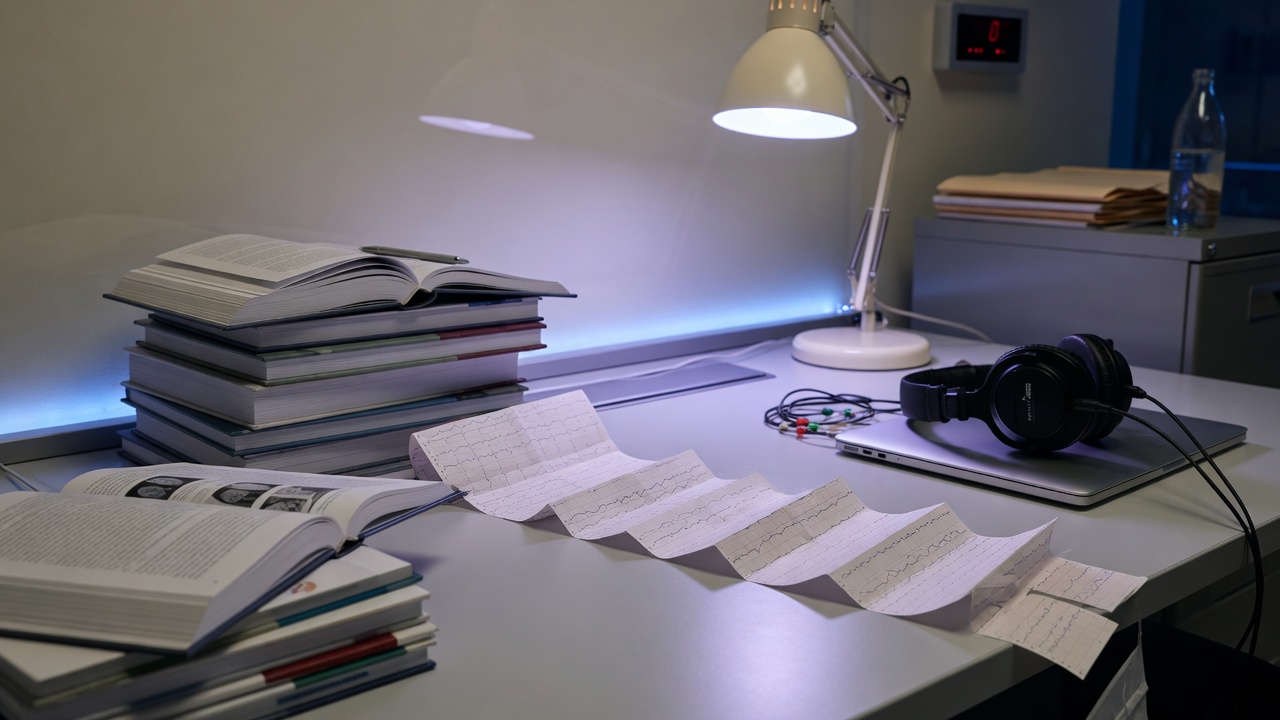
The papers are mixed. The percept is not. This hub maps what EEG and behavioral studies actually support — then hands you the free Console so you can hear a true-stereo difference tonight.
Reading rule: A program using a “10 Hz intention” is a design target, not a promise that your cortex will lock to 10 Hz. Studies measure group averages, short sessions, and controlled labs. Your living room is not a lab. Headphones still required.
Brainwave bands (EEG literature)
| Band | Approx. Hz | Common associations in EEG texts | Deep dive |
|---|---|---|---|
| Delta | ~0.5–4 | Deep (slow-wave) sleep, restoration | Delta research |
| Theta | ~4–8 | Drowsiness, meditation, memory-related states | Theta research |
| Alpha | ~8–12 | Relaxed wakefulness, eyes-closed rest | Alpha research |
| Beta | ~13–30 | Active attention, problem-solving | Beta research |
| Gamma | ~30–100+ (often ~40) | Binding, attention research interest | Gamma / 40 Hz |
Binaural-beat outcome research
- Meta-analysis overview — Garcia-Argibay et al. (2019) on cognition, anxiety, and pain perception
- Anxiety & stress literature
- Memory & attention literature
- Sleep-oriented listening research
- Neural mechanism — Oster (1973) and central auditory comparison
- Frequency-following & entrainment caveats
Run the same design targets on the Machine
Open the Console · Browse programs
Related
Paper shelf · How binaural beats work · History & science · Methodology · Headphones
Educational only. Not medical advice. Headphones required for a true binaural beat. Individual responses vary.
Guides · Paper shelf · Console · Membership